

Under the Sukkah
Delivered by Student Rabbi Ben Russell on Erev Sukkot 5787
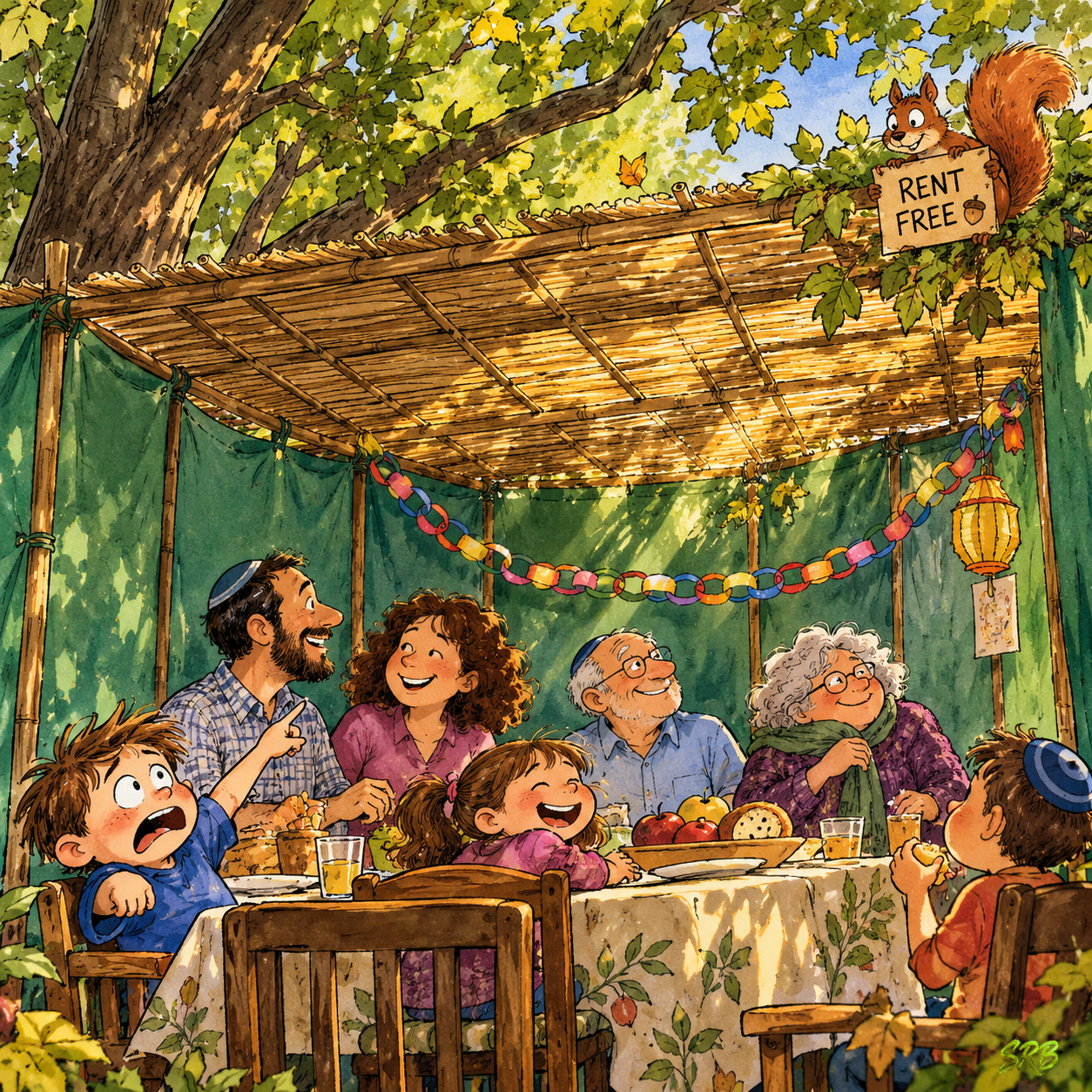
I have a question, especially for our little ones this evening. Who would like to live in a sukkah all year long? Really? Even in the middle of summer? Even when it's freezing outside? What about when it rains? What if a squirrel moves into your sukkah and refuses to pay you rent?
There's something wonderfully ridiculous about a sukkah. We spend so much of our lives building houses to keep the weather outside. We put up walls. We install windows. We repair our roofs. And we turn on our air conditioners. And then, once a year, Judaism tells us to go outside and build a little house that doesn't do a really good job on any of those things.
We build walls, but they're not especially strong. We put a roof over our heads, but we leave openings so that we can see the sky. We can feel the breeze. We can hear the world around us.
And somehow, we call this shelter.
I find that beautiful.
We've just come through the High Holy Days. For weeks, we've been looking carefully at ourselves. We've been examining our lives, considering our mistakes, asking hard questions, and thinking about who we are and who we want to be. That's not always comfortable work.
Sometimes we discover things about ourselves that make us really proud. Sometimes we discover things we'd rather not have noticed. Sometimes we recognize that we've hurt someone. Sometimes we discover we have been hurt. Sometimes we discover we’ve hurt ourselves. And sometimes we finish Yom Kippur with more questions than answers.
Then, just a few days later, Judaism invites us into the sukkah. Not a fortress with brick walls. Not a house where we can close every window and shutter out the world. A sukkah.
A place where we can remain open to the world while still having somewhere to sit.
And maybe that's exactly what we need after the High Holy Days. Because all that honest examination can leave us feeling a little raw and exposed. We've spent so much time looking at ourselves that we may have discovered some tender places we didn't realize were there. We need a little shelter.
But here's the thing about a sukkah. We don't have to sit in it alone. In fact, we're encouraged to welcome people into it. And that can present some interesting challenges.
Imagine everybody sitting together in one sukkah. One person says, "I'm hot!" Another person says, "I'm cold!" Somebody says, "I'm hungry!" And somebody else starts screaming because there's a bug crawling up their leg. Meanwhile, that squirrel still hasn't paid his rent. Now, how are we supposed to enjoy sitting together when everybody wants something different?
Well, perhaps we begin by noticing one another. Maybe the person who's cold needs a sweater. Maybe the person who's hot needs to move into the shade. Maybe somebody needs to help that poor child get that bug off their leg. And maybe we need to remember that just because we're all sitting in the same sukkah doesn't mean we're all having the same experience.
That's true outside the sukkah, too. We don't always know what the people around us are thinking and carrying. Someone may be celebrating something wonderful. Someone else may be grieving. Someone may have discovered something difficult about themselves during these High Holy Days and may still be trying to figure out what to do with it. And they may not know what we're carrying, either.
We have spent these sacred days trying to become more honest with ourselves. Now we have an opportunity to bring that honesty into our relationships. But honesty and gentleness belong together.
Being gentle doesn't mean pretending that everything is fine. Sometimes we need to have difficult conversations. Sometimes we need to hear things we don't particularly want to hear. Sometimes we need to tell someone what we need. But we can do those things while remembering that the person sitting across from us is a human being, just as we are.
Perhaps we can offer one another something like the shelter of a sukkah. Not a place where we hide from every uncomfortable truth. Not a place where we have to expose every tender part of ourselves, either. Just enough shelter that we can remain open to the world without losing ourselves.
And there's one more thing. Sukkot is z'man simchateinu, the season of our rejoicing. After all those days of examination, Judaism doesn't tell us to spend the rest of the year sitting around thinking about everything that's wrong with us. It tells us to celebrate! To eat together. To welcome guests. To enjoy the world around us. To sit beneath a roof through which we can still see the sky.
We don't have to have everything figured out before we can rejoice.
We don't have to become perfect people before we can enjoy one another's company. We can come together just as we are, still learning, still growing, and perhaps still a little tender from everything we've discovered.
And if there's one thing I hope we carry with us as we leave these sacred days and enter this season of rejoicing, it's this:
Be gentle with one another, and yourself too.
,שבת שלום ויום טוב
Student Rabbi Ben