There Is Wisdom Here
Delivered by Student Rabbi Ben Russell at the Cemetery Memorial Service, 5787
There is wisdom here. That is one of the reasons we come to a cemetery before Yom Kippur.
We come, of course, to remember. We come because there are people buried here whom we love. Parents and grandparents. Husbands and wives. Brothers and sisters. Friends. And, for some, children. We come to say their names. We come to stand near them again.
But I think we also come here to learn. Because there is wisdom in a cemetery.
The dead know something that we do not. I don't mean that as a claim about what happens after death. I mean something much simpler, and perhaps more mysterious.
They have lived a completed life. We have not.
Every person buried here has crossed a boundary that we have not yet crossed. They know, in a way that we cannot yet know, what it means for a life to have had a last day. The last conversation has been spoken. The last ordinary Tuesday has come and gone. The last argument has been argued. The last meal has been eaten. The last embrace has been given.
And from here, I wonder how different some of the things that consume us might look. The argument with your sister. The grudge you have been carrying. The phone call you keep meaning to make. The apology you know you owe. The thing you are afraid to say. The love you assume there will always be time to express.
From here, which of those things becomes smaller? And which becomes more important?
Because the wisdom of the cemetery is not that nothing matters. Quite the opposite. Some things that seem enormous in the middle of our lives may become very small when placed beside a completed life. And some things we keep postponing may suddenly become urgent.
Of course, our dead are not all uncomplicated. Neither were their lives. Some of the people we visit taught us through extraordinary love and kindness. Some taught us through mistakes. Some relationships left wounds alongside love. Some left questions that were never answered and things that were never repaired.
But there can be wisdom there, too. We can ask what we have inherited from those who came before us and from those we have loved. What deserves to be carried forward? And what should end with us? That, too, is the work of teshuvah.
In a few days, we will enter Yom Kippur. We will speak about life and death. We will examine ourselves. We will ask where we have missed the mark and where we might yet turn.
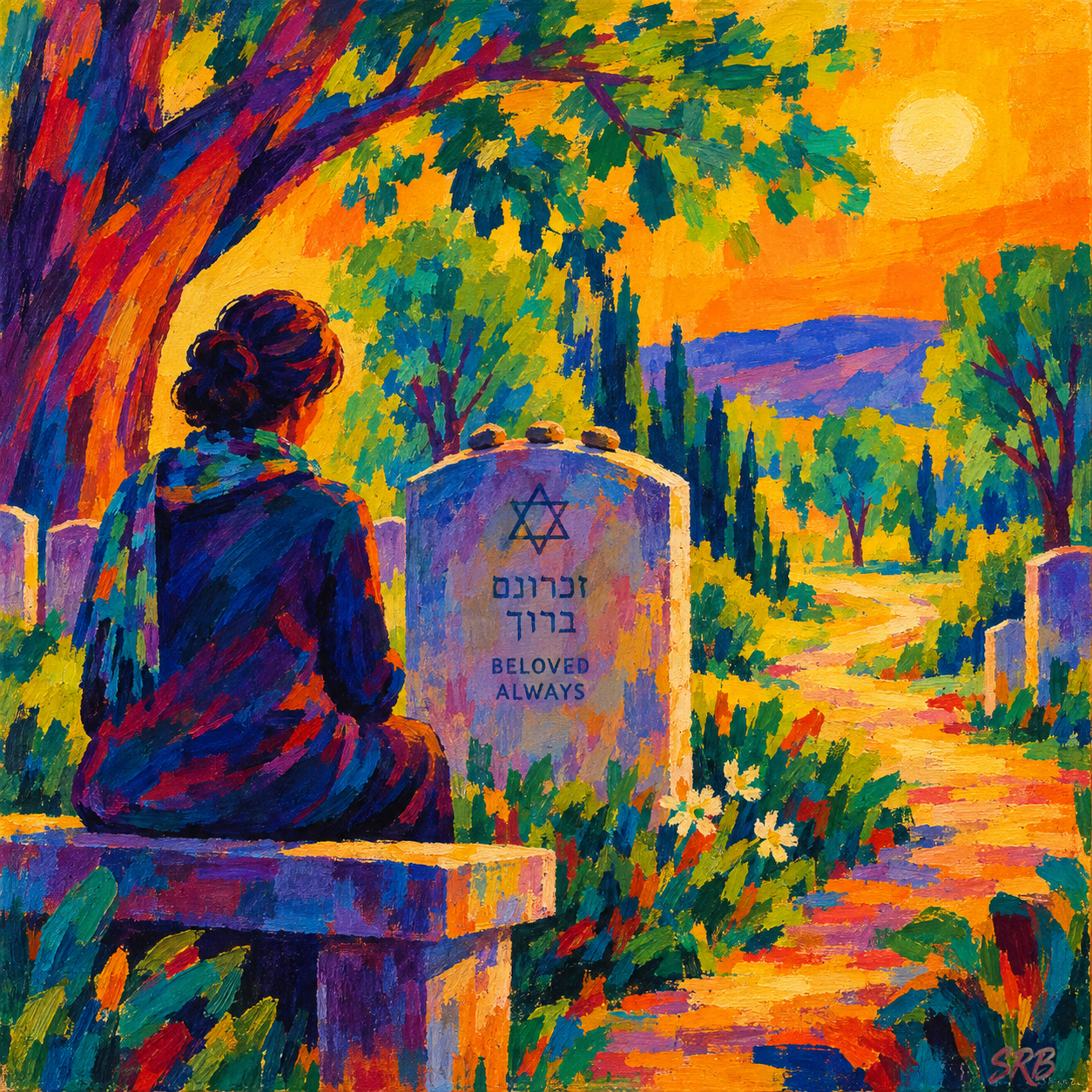
But today, before we do all of that, we have come here. We have come to stand among our dead. And in a few moments, many of us will go to the grave of someone we love.
When you get there, I want to invite you to bring something with you. Bring something from your life as it is right now. Something that is troubling you. Something you are angry about. Something you are afraid of. A relationship. A decision. A regret. A hope.
Stand beside the person you came here to visit. And ask them:
From where you are, what does this look like?
And then be quiet for a little while. Listen. Not because we necessarily expect a voice from beyond the grave. Listen to their life. Listen to their death. Listen to your memories of them. Listen to what becomes clearer simply because you are standing here.
There is wisdom in the cemetery. And we do not come here simply to be reminded that someday we will die. We come here so that we might learn something about how to live.
Our loved ones have finished their lives. We are still living ours.
So may we come to stand among our dead. May we have the courage to learn from them. And then may we leave this place and return to the living—with gratitude for the life that is still ours, and with the obligation to do something with what we have learned.