
Permission to Look
Delivered by Student Rabbi Ben Russell on Kol Nidrei 5787
We began tonight with words from the Psalms:
Or zarua latzadik, ul’yishrei lev simchah. “Light is sown for the righteous, and joy for the upright of heart.”
It is an interesting image with which to begin Yom Kippur. Light.
We have spent the last ten days turning. We have tried to wake up. To pay attention. To notice our lives. And to ask where we are headed and where we might need to turn. And eventually, if we keep turning toward the light, we begin to see things. Some of them are beautiful. Some of them are not. Some are things we already knew were there but preferred to leave in the shadows. Some are things we were afraid to look at. Some are things we have never looked at before. And some are things we never even knew were there.
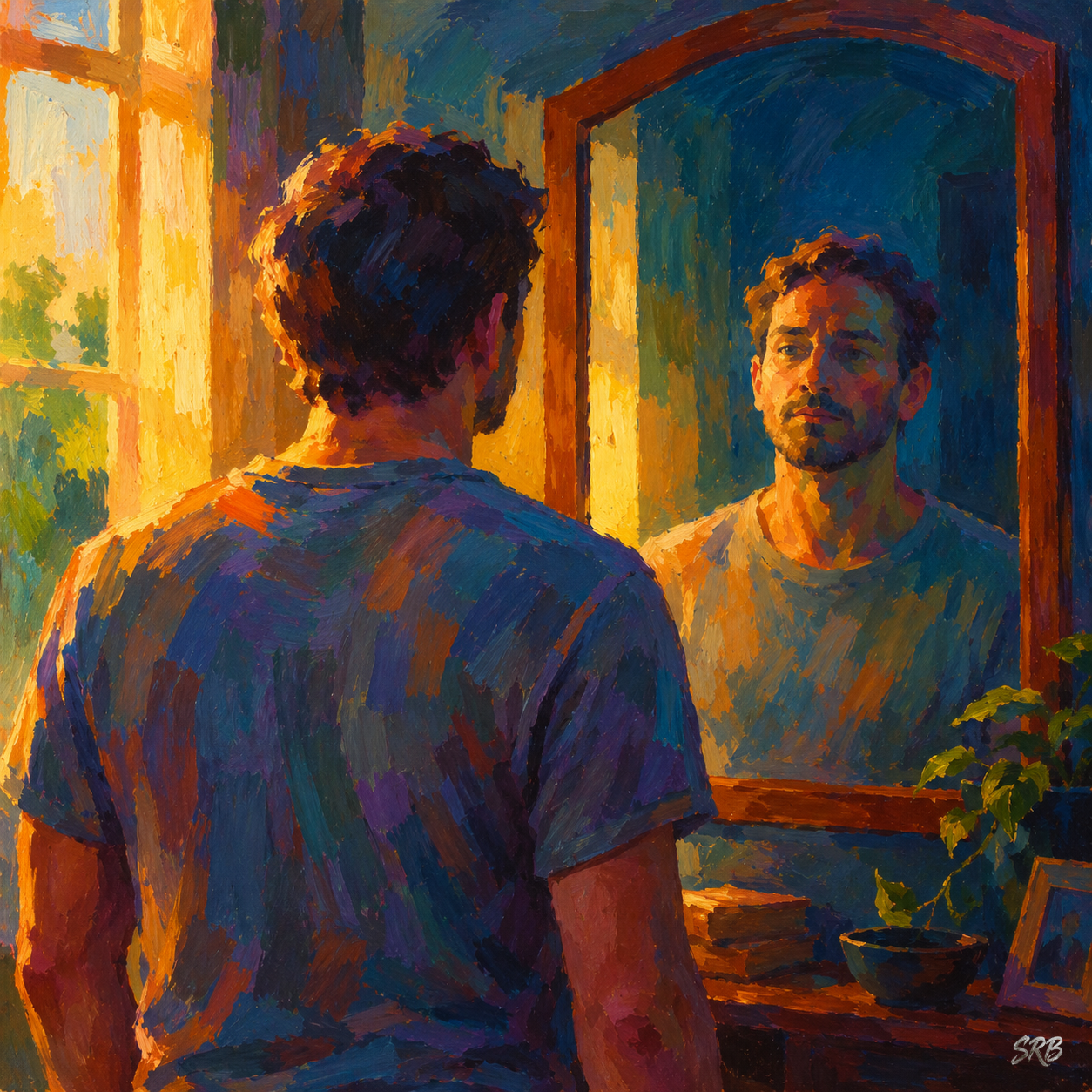
Tonight, I want to give us permission to look. Not permission to judge. Not permission to condemn. Just permission to look.
Because teshuvah requires some grasp of reality.
We cannot change a life we refuse to see.
We cannot repair harm we refuse to acknowledge. We cannot understand a relationship if we are unwilling to look honestly at what it has become. And we cannot know ourselves if there are rooms within us we have decided we are never allowed to enter.
Sometimes the problem isn’t dishonesty. Sometimes it is simply that we have never looked. Our lives are busy. We work. We care for people. We answer emails. We pay bills. We make dinner. We worry. We scroll. We go to meetings. We solve whatever problem is immediately in front of us. We learn to live a life without spending very much time actually looking at it.
Yom Kippur interrupts that. Tonight, we stand beneath a brighter light. And the invitation is simply: Look.
Look at what you have done. Look at what has been done to you. Look at what you regret. Look at what you resent. Look at the promises you have made. Look at the promises you have broken. Look at the things you have never said. Look at the things you wish you had never said.
Look at the versions of yourself you have been carrying. The person who failed. The person who was hurt. The person who hurt someone else. The person who is angry. The person who is ashamed. The person who is afraid. The person you used to be. The person you are afraid you might be. Just look.
Because there is a strange thing that can happen when we finally tell the truth about ourselves. The world does not end.
We can honestly say: I did this. I regret this. I am angry about this. I am carrying this. I have avoided this. This happened to me. I don’t know what to do with this part of me. And still, the universe continues.
That may be one of the biggest gifts of confession. Confession gives us permission to be human.
We will spend much of Yom Kippur confessing. We will name failures publicly and privately. We will say words that generations before us have said. We will name things we have done and things we’ve never even considered doing. Not because God needs the information. What could we possibly tell the Source of all Existence that was successfully hidden until Yom Kippur? God is the One before whom hiding eventually becomes pointless. We are not telling God something God did not know. Perhaps we are finally allowing ourselves to know it.
And that requires honesty. But it also requires gentleness. Those two things belong together tonight.
Honesty without gentleness can become cruelty. We can look deeply into ourselves and decide that every failure is evidence that we ourselves are failures. We can take something we have done and turn it into a definition of who we are. We can confuse guilt with worthlessness.
But gentleness without honesty can become another way of hiding. We can excuse what needs to be acknowledged. We can minimize harm. We can tell ourselves that everything is fine because looking more closely would hurt.
Yom Kippur asks something harder of us. Be honest. And be gentle. Because the person you are examining tonight is also made b’tzelem Elohim—in the image of God. We are required to recognize the Divine Image in others. Tonight, do not forget to recognize it in the person doing the confessing.
That does not erase guilt. If we have caused harm, the harm matters. If repair is possible, we have work to do. If we owe an apology, feeling badly is not a substitute for making one. And teshuvah does not magically remove consequences.
There is an old Jewish folktale about someone who has spread lashon hara, harmful speech, and comes seeking a way to repair what they have done. The rabbi tells the person to take a pillow filled with feathers, open it, and scatter the feathers to the wind. Then the rabbi tells them to gather every feather back. Of course, they cannot.
Some things cannot simply be put back where they were. Words travel. Actions have consequences. People remember. Relationships change. Even sincere teshuvah does not give us the power to make the past unhappen. And forgiveness does not require pretending that it did.
Forgiving someone does not necessarily mean returning a relationship to what it was before. It does not necessarily mean restoring access to our lives. Sometimes reconciliation is possible. Sometimes it is not. Sometimes a boundary is part of the truth. The light is bright enough to reveal that too.
There are things we cannot undo. But there are things we do not have to keep becoming.
The past is real. But we are still becoming.
And perhaps that is why telling the truth becomes possible only when we believe change is possible. If I believe that whatever I discover tonight is permanent—that whatever I have done, whatever has happened to me, whatever bitterness I carry, whatever part of myself frightens me is the final definition of who I am—then of course I will be afraid to look.
But if change is possible, I can have the courage to look. I can acknowledge guilt without deciding that I am worthless. I can recognize bitterness without deciding that I must remain bitter. I can recognize anger without pretending it is not there. I can recognize something beautiful in myself without confusing dignity with ego. I can see myself neither inflated nor diminished. I can simply try to see myself truthfully.
And perhaps somewhere in that truth is something we desperately need to remember tonight: We have dignity. Not because we have lived perfectly. Not because we have avoided every mistake. Not because we have never harmed anyone. We have dignity because we are human. Because we are b’tzelem Elohim. Because even here—even standing beneath the bright light of Yom Kippur, even when we see things we wish were different—
we remain worthy of becoming.
Tonight we have heard Kol Nidrei. Its melody reaches into places words sometimes cannot. And now Yom Kippur stretches before us. There will be time for confession. There will be time for repentance. There will be time to think about repair, forgiveness, what we need to release, and what we may still need to carry.
But perhaps tonight we can begin somewhere simpler. Give yourself permission. Just permission to look. Let the light reach the places you don’t want it to reach. The places you’ve never looked. The places you were afraid to look. The places you didn’t even know existed.
You do not have to solve everything you find there tonight. You do not have to hate yourself for finding it. You do not have to pretend it isn’t there.
Look honestly. Look gently. God is already there. And so are you.