
Relationships Are Living Things
Delivered by Student Rabbi Ben Russell on Erev Shabbat B'reishit 5787
We have just come through the High Holy Days. For weeks, we asked ourselves difficult questions. Who am I? Who have I hurt? What needs to change? And am I willing to do the work of changing? We looked in the mirror.
And now, almost immediately, the Torah gives us Cain and Abel. Two brothers. Two offerings. One accepted by God, the other not.
Cain becomes angry. And God asks him a remarkable question: “Why are you angry? Why has your face fallen?”
God doesn't tell Cain that he shouldn't be angry. God warns him. Sin is crouching at the door. It desires you. But you can master it.
Cain still has a choice.
I've been thinking about that. We sometimes talk about anger as though it's something terrible, something we shouldn't feel. But anger is part of being human. And perhaps it's something more.
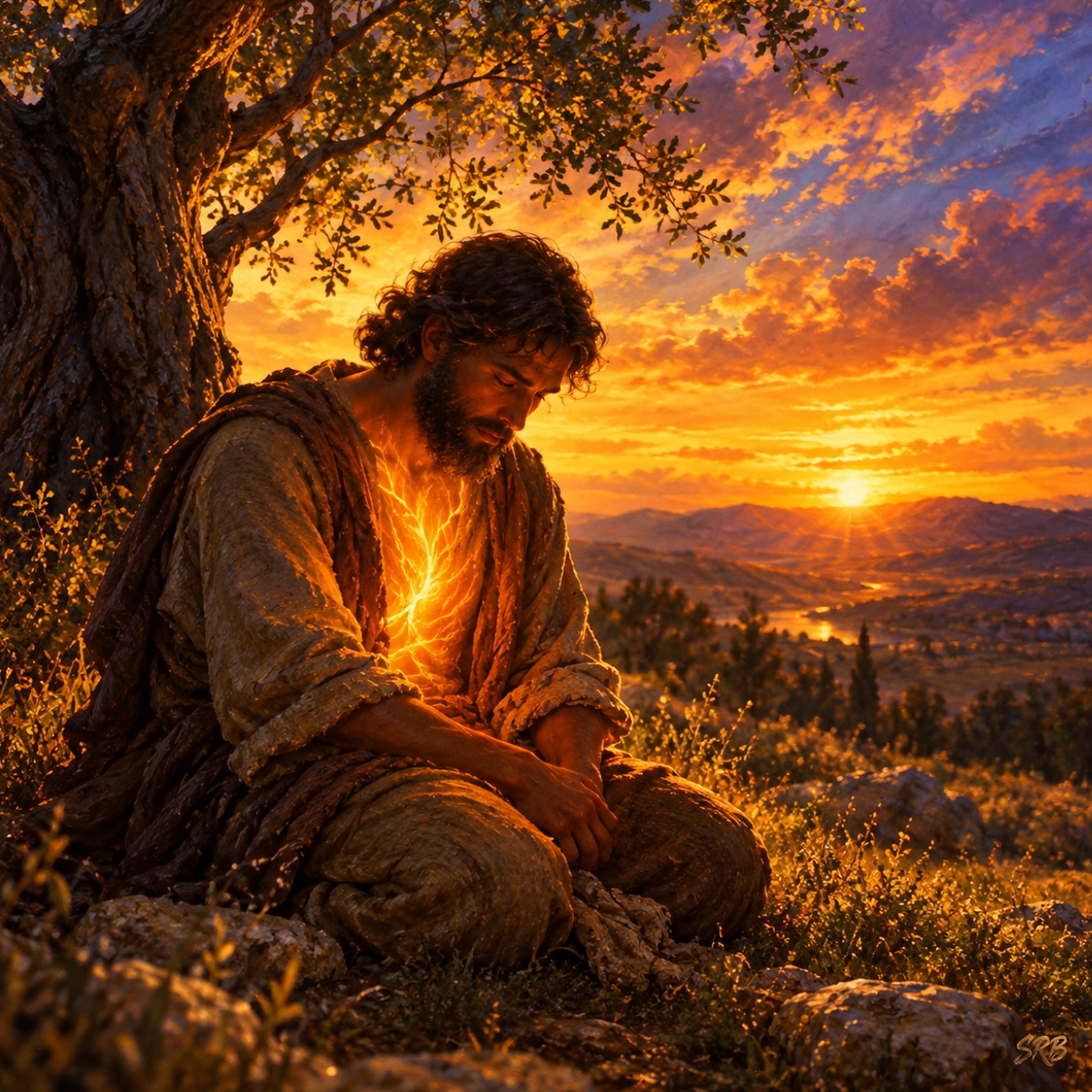
The Torah tells us that we are created b'tzelem Elohim, in the image of God. And God gets angry. God loves. God grieves. God rejoices. Perhaps our emotions are themselves little sparks of the Divine within us.
But even a divine spark can become a fire.
But even a divine spark can become a fire. And a fire, left unchecked, can consume us—and the relationships around us.
That's what happens to Cain. He allows his anger to consume him, and he kills his brother.
Then God asks him, “Where is Abel, your brother?” And Cain answers with one of the most haunting questions in the Torah: Hashomer achi anochi? “Am I my brother's keeper?”
We know the answer. Of course he is. We belong to one another. We share this world. We share our humanity. And each of us carries that same divine image.
But Cain's question does something terrible. It denies that belonging. It says, in effect, “What happens to you is no concern of mine.” And perhaps that is where we can finally see just how completely the relationship has broken.
But here's something interesting. God doesn't kill Cain. God holds him accountable. Cain must live with the consequences of what he's done. He leaves his home, and the life he knew is gone. But God also protects him.
God does not restore what Cain destroyed. But God does not abandon Cain, either.
God does not restore what Cain destroyed. But God does not abandon Cain, either. Even Cain, who has done something terrible, is not beyond God's concern. His actions have consequences. But his life still has worth.
And I wonder whether there's something here about love. Because Cain cannot bring Abel back. He cannot repair what he has destroyed. And sometimes, neither can we.
Not every broken relationship can be put back together. Some relationships are destroyed by terrible choices. Others simply change over time. Sometimes the hurt is too deep. Sometimes someone has died. Sometimes the healthiest, most loving thing we can do is recognize that two people cannot safely remain in each other's lives.
That doesn't mean the love was never real. It doesn't mean the relationship meant nothing. It means that relationships are living things.
Relationships are organic. They wax. They wane. They live. They die.
Relationships are organic. They wax. They wane. They live. They die. Sometimes that's painful. Sometimes it's necessary. Sometimes it's terribly unfair. Sometimes it's okay. Either way, life continues, and somehow we learn to live with what has changed.
Either way, life continues, and somehow we learn to live with what has changed.
We can love someone without being near them. We can remember a relationship with gratitude, even when we know it cannot continue. We can honor the divine image in another person without pretending that everything between us can be made right.
But we must also remember something about Cain. His tragedy didn't begin when God asked where Abel was. It began when Cain had a choice about what to do with his anger.
And what would it look like to choose love before something precious is lost?
And that brings us back to the High Holy Days. We cannot always save a relationship. We cannot always undo what we've done. But while we still have a choice, we can ask ourselves: What am I allowing to consume me? Who might be hurt by what I do next? And what would it look like to choose love before something precious is lost?
,שבת שלום
Student Rabbi Ben