Remember Us for Life
Student Rabbi Ben Russell
Rosh Hashanah Morning 5787
Zochreinu l’chayim.
Throughout these days we add these words: Remember us for life. Rosh Hashanah itself is Yom HaZikaron, the Day of Remembrance.
Remember us.
Remember our lives.
But why would God need reminding?
Surely we do not imagine that God has somehow misplaced our file. Perhaps “remember us” means something deeper. To be remembered is to be held in awareness—to be seen, known, regarded. To matter.
See this life. Know this life. Let this life matter.
There is something audacious about asking the Creator of the universe to remember this particular life. Among billions of people, across generations, across the enormity of creation: Remember me.
Not because I am more important than everyone else, but because a human life is important.
And perhaps Rosh Hashanah turns the prayer back toward us. We ask God to remember our lives. Are we willing to regard our own lives with the attention we are asking God to give them?
The claim that my life matters is comforting, but it carries responsibility. If this life is worth God's attention, perhaps it is worth mine. If my life matters, then how I live it deserves my attention.
Not because I have to live well enough to make my life matter. Its worth does not depend upon what I accomplish with it. The order runs the other way: because this life already matters, what I do with it matters.
Rosh Hashanah invites a kind of sacred accounting—not a celestial report card and not yet the confession of Yom Kippur. It asks us to examine a life.
Judaism does not ask this because our lives are worthless. It asks us to examine them because every soul, every breath, every person is worthy of our attention because we are made in the Divine Image.
What received my attention this year?
What did I learn?
What did I protect?
What did I neglect?
Who became important to me?
What did I allow to become unimportant?
Where did I experience joy?
Where did I stop noticing?
What kind of person am I becoming?
Those choices matter. Over time, they help shape the architecture of a life. But most of that life is not actually lived in the moments that feel architecturally important.
A life is not lived primarily in dramatic decisions either. Most of it happens in moments:
Breakfast.
Driving somewhere.
Answering the phone.
Sitting beside someone.
Going to work.
Coming home exhausted.
Hearing good news.
Getting frightening news.
Seeing something beautiful.
Being interrupted.
Being disappointed.
Waiting.
Celebrating.
Grieving.
A life is largely made up of these moments we didn't recognize were important while they were happening. And accumulated over time, these moments wear deeper grooves into our being than we realize.
And that raises the larger question of Rosh Hashanah morning:
If my life matters, how do I want to live it?
We are hardly the first Jews to ask.
Generations of Jews before us wrestled with exactly that question. How should I spend my days? What do I owe another person? What makes something holy? What do I do when I have caused harm? How do I grieve? How do I celebrate? How do I rest? How do I live with uncertainty? What does God ask of me? What if I don't know what I believe about God? How do I face death? How do I raise children? How do I live with other people? How do I become the person I want to be?
And those generations of Jews did something remarkable:
They kept the conversation.
Torah. Prophets. Psalms. Mishnah. Talmud. Midrash. Halakhah. Philosophy. Kabbalah. Hasidic teachings. Poetry. Song. Prayer.
Torah speaks to Mishnah. Midrash reimagines Torah. Rabbis argue with rabbis. Philosophers ask different questions from mystics. Poets answer differently from legal scholars. Generations received what came before them, questioned it, argued with it, interpreted it, practiced it, sometimes changed how it was understood, and handed it forward.
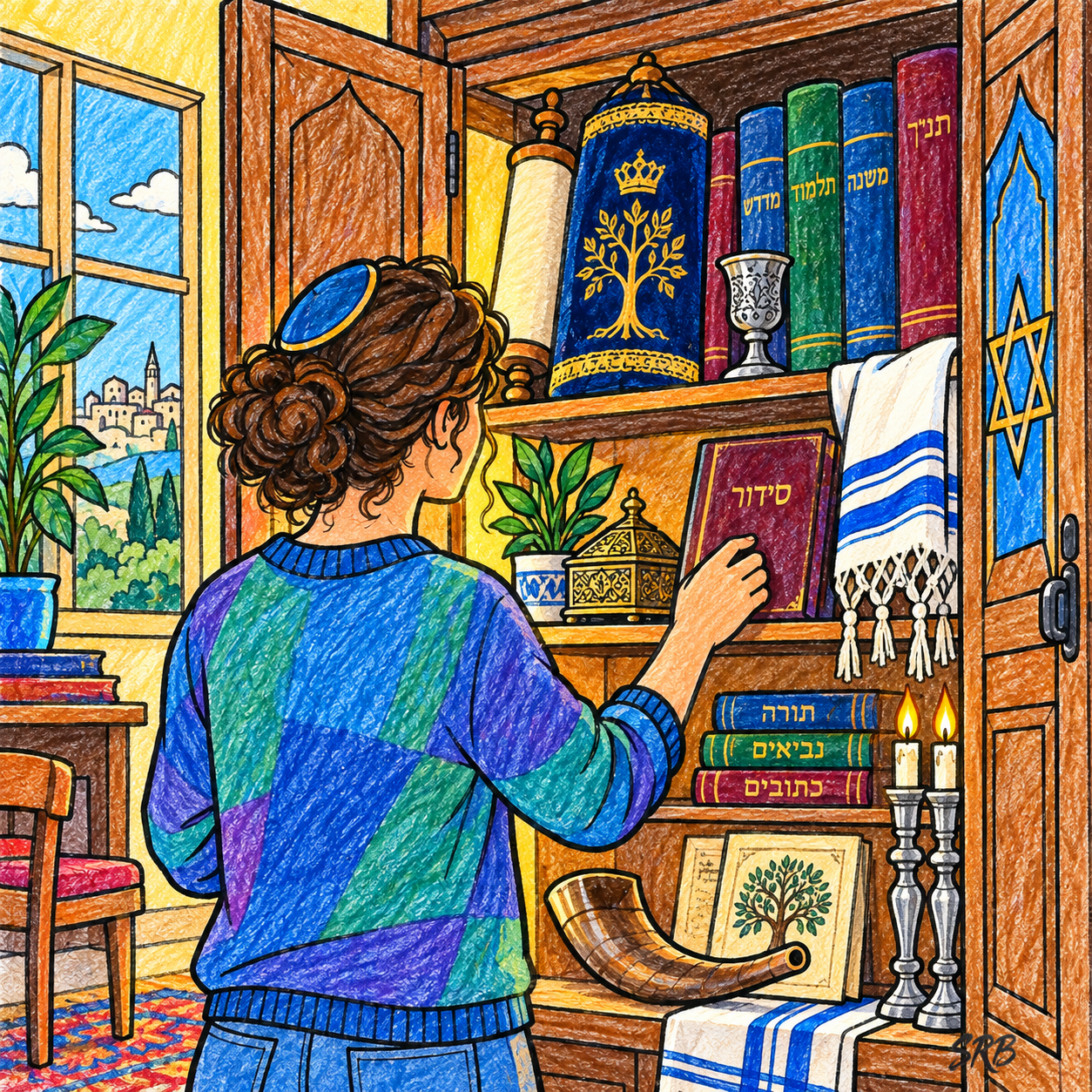
The inheritance is not a sealed box from antiquity.
Every generation received it in a different world. They asked old texts new questions because they were living new lives. They preserved things. They challenged things. They rediscovered things. They created new things. And then they handed the inheritance to the next generation.
We aren't standing at the end of the Jewish conversation. We are among the people receiving it now.
Our tradition is ancient.
Our lives are not.
Every generation has had to discover what happens when the two meet.
We could describe Judaism as a collection of beliefs, books, laws, holidays, prayers, and customs. But that misses something. Judaism has accumulated ways of meeting the moments of an actual human life.
You wake up: Jews have words for that. Before you have accomplished anything—before you have even gotten out of bed—Jewish tradition offers gratitude for being alive.
You eat: Judaism asks you to notice. Not merely consume. Bless. Recognize. Receive.
You encounter something beautiful: There is a blessing for that.
Thunder. Lightning. A rainbow. A remarkable person. A season. Something you haven't experienced in a long time. Judaism has this strange impulse to interrupt experience long enough to say:
Notice this.
You work: Judaism has something to say about labor, responsibility, honesty, treatment of workers, and what boundaries work has on our lives.
You become exhausted: Judaism gives us Shabbat. Not merely as a worship service, but as an audacious claim that you are allowed to stop producing.
You don't understand something: Study. Question. Argue.
You hurt somebody: Judaism gives us teshuvah: not merely feeling guilty, but practices for acknowledging harm and trying to repair it.
Someone becomes sick: There are words. There are obligations. There is presence. Bikkur cholim—the mitzvah of visiting and caring for the sick.
Someone dies: There are ways of remembering and expressing our grief.
Something wonderful happens: There are blessings. Songs. Meals. Dancing. Shehecheyanu.
You are uncertain or angry with God: Jewish tradition contains arguments, questions, contradictions, wrestling, doubt—and people who dared to argue with God.
And sometimes something completely ridiculous happens.
Life interrupts the ceremony. The plan goes sideways. An ice-cream truck drives through the outdoor wedding.
Not every sacred moment announces itself as sacred.
Sometimes holiness arrives disguised as an interruption.
Because this is what human life actually looks like. This year:
We'll get angry.
We'll be exhausted.
We'll see a rainbow.
We'll screw something up.
Someone will be born.
Someone will die.
We'll fall in love.
We’ll fall out of love.
We'll get frightening news.
We'll laugh when we weren't supposed to.
An ice-cream truck will drive through the wedding party.
Judaism doesn't necessarily prevent any of it. Nor does Judaism necessarily explain why any of it happens.
It gives us ways to meet it.
Sometimes a practice. Sometimes a blessing. Sometimes a question. Sometimes an obligation. Sometimes another person. Sometimes simply words when our own words have failed us.
This is important because otherwise Judaism can start to sound like a very impressive library: thousands of years of accumulated information about human life.
But that isn't quite what we inherited.
These practices are ways of inhabiting a human life.
Judaism doesn't always respond to life by giving us an answer. Often it gives us something to do.
An inherited practice can sit on a page for generations. But eventually someone has to live it.
Torah has to be studied. Prayer has to be prayed. A blessing has to be spoken. Shabbat has to be experienced. A niggun has to be sung. An argument has to be argued. A grieving person has to be sat beside.
The inheritance becomes alive when it encounters an actual human life.
And that encounter is always new.
The blessing may be two thousand years old.
This rainbow isn't.
The words of Torah may be ancient.
This question isn't.
The prayer may have been said by generations.
This grief is mine.
Shabbat is ancient.
This Shabbat has never happened before.
Every generation receives something old and discovers what happens when it meets a life that has never existed before. And that includes us.
We often approach Jewish life by asking what Judaism wants from us: What am I supposed to believe? What am I required to do? What should I know? Where am I supposed to show up?
But perhaps Rosh Hashanah allows us to reverse the question.
What if somewhere in this enormous inheritance there is something you need?
Maybe Shabbat. Maybe Torah. Maybe prayer or music or ritual. Maybe it’s Hebrew, or history, or simply a way to grieve. A way to celebrate. A way to stop. A way to apologize. Maybe God. Maybe permission to doubt God. Maybe permission to argue with God. Maybe simply a way to notice your own Jewish life differently.
This is not about what Judaism deserves from you.
You, and me, deserve to know what's here.
We deserve access to this inheritance.
Because that is the strange thing about an inheritance: you do not have to earn it before you are allowed to open it.
It is yours before you know everything it contains. You do not have to become sufficiently knowledgeable, sufficiently observant, sufficiently certain about God, or sufficiently “religious” before you are allowed to encounter it.
And encountering it does not mean accepting all of it.
The invitation is smaller—and perhaps more interesting:
Become curious.
You do not have to accept everything. You do not have to believe everything. You do not have to practice everything or become some “more religious” version of yourself. You certainly do not have to stop asking difficult questions.
But perhaps encounter something before dismissing it. Learn what it actually is. Experience it. Ask why Jews did it. Ask what they saw in it. Ask what generations found worth preserving.
And then ask:
Is there something here for me?
Because the truth is we all deserve a Judaism informed by actual encounter with Judaism.
And some of those encounters can happen alone.
You can read. Study. Pray. Light candles. Think.
But some things change when another person enters the room.
Torah study becomes argument. A niggun becomes harmony. A Shabbat meal becomes conversation. Grief becomes something someone sits beside you through. Joy becomes something somebody dances with you through. A question becomes something another person answers with an even better question.
And Jewish life can simply be fun.
Mahjong. Food. Books. Music. Bowling. Golf. Fishing. Knitting. Sitting around a table. Laughing.
Not everything needs a measurable spiritual outcome.
Not every Jewish experience has to accomplish something. Some things are worth doing simply because they make our lives more Jewish.
And perhaps that brings us back to the words we have been saying throughout this day:
Zochreinu l'chayim.
Remember us for life.
We have asked to be remembered for life.
Suppose we are.
Suppose another year is placed before us.
What will we do with it? What might we discover? What might we try?
And so we ask ourselves:
What have I inherited but never opened?
What Jewish question have I never asked?
What practice have I assumed wasn't for me?
What prayer have I said without ever wondering what it means?
What part of Jewish life have I never actually experienced?
Generations came before us.
They woke. Ate. Worked. Loved. Argued. Celebrated. Grieved. Doubted. Prayed. Failed. Learned. Buried their parents. Raised children. Sat with friends. Welcomed Shabbat. And asked impossible questions.
And eventually, their lives ended.
But they left something.
And now we are the people holding it.
Not every answer will be ours.
Some things we'll reject. Some we'll reinterpret. Some we'll argue with. Some we'll recover. Some we'll fall in love with. Some may even change our lives.
But we cannot know what is there without encountering it.
There is an inheritance here that might help you live.
You deserve to know what's in it.
Zochreinu l'chayim.
Remember us for life.
And if we are remembered for life—
may we remember to live it.
,שנה טובה
Student Rabbi Ben