

Your Life is Happening
Student Rabbi Ben Russell
Ar’vit L’Rosh Hashanah 5787
Yesterday belonged to one year. Tonight belongs to another. Nothing physically changed when the sun went down. And yet Judaism says: This moment is different.
Another year has passed remarkably quickly. Some things are dramatically different from last Rosh Hashanah. Some things are almost exactly the same. Some changes happened so gradually that we barely noticed them.
What happens when we actually stop long enough to realize that another year of our lives has passed? “Teach us to number our days,” the Psalmist prayed (Psalm 90:12). Perhaps wisdom begins simply by noticing that our days are passing.
Judaism repeatedly interrupts ordinary time. Shabbat interrupts the week. Rosh Chodesh marks the month. Festivals interrupt the year. Morning and evening have prayers. Life transitions receive blessings and rituals.
Judaism refuses to let all time become interchangeable. “For everything there is a season” (Ecclesiastes 3:1). There is ordinary time. There is sacred time. Often the difference begins simply because we notice.
Rosh Hashanah is one of Judaism's great interruptions. Stop. Look around. Look backward. Look inward. Realize: Your life is happening.
Before we ask what needs to change, maybe we should notice what is already here. Maybe we should resist rushing immediately into repentance. Yom Kippur will give us plenty of time for confession. The coming days will ask difficult questions. Tonight does not have to begin with everything we did wrong.
Maybe we should begin instead with awareness. Who is sitting beside me tonight? Who am I missing? Who has entered my life? What relationship has changed? What have I learned? What have I survived? What surprised me? What became ordinary that I once would have considered extraordinary?
T’shuvah is not merely discovering what is wrong with us. Attention also allows us to discover what is good. Some things in our lives do not need fixing. Some things need noticing, protecting, enjoying, or blessing. So make room for gratitude as well.
And now a new year begins. We do not know what 5787 will contain. There will be things we choose. There will be things we cannot choose. There will be joy we cannot predict. There may be losses we cannot prevent.
But we have some agency over how awake we are while living it: whether we notice people, whether we make room for wonder, whether we allow relationships to become background scenery, whether we pay attention to what is happening inside us.
We do not have to become somebody else at sunset. The goal is not “new year, new person.” T’shuvah ultimately means turning, not replacing ourselves. And before we can turn, we have to notice where we are. We begin by becoming present enough to choose what comes next.
Of course, we are hardly the first people to wrestle with how to live a meaningful life. Generations of Jews before us asked many of the same questions we ask now. They wondered how to use their time, how to live with other people, how to face uncertainty, how to find meaning, how to live lives of goodness and integrity. And over thousands of years, they left us the wisdom they discovered along the way.
What if there is something in that wisdom each of us hasn't discovered yet—a question we haven't thought to ask, a practice we have never tried, a way of seeing our lives we have never encountered? What if, instead of beginning with what Judaism asks of us, we simply became curious about what we might find?
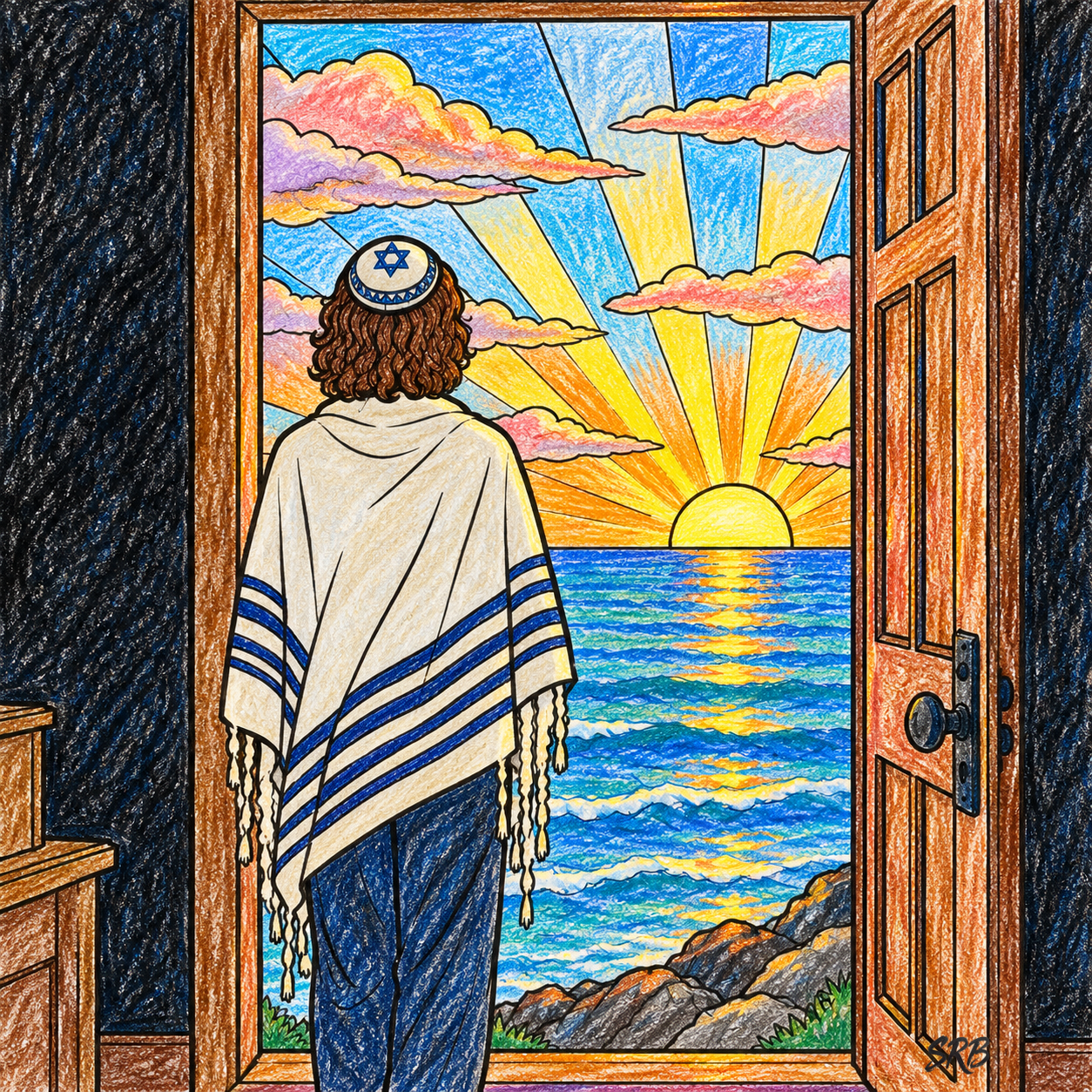
We have crossed the threshold. 5787 has begun. We cannot know what the year will bring. But we can decide not to sleepwalk through it.
This year, notice one another. Notice yourself. Notice what gives you life. Notice what you have been neglecting. Notice what within Jewish life makes you curious.
We are at the beginning. Questions are enough for now. Your life is happening. Another year of it has begun. “Wake up, you sleepers, from your sleep,” Maimonides hears in the call of the shofar (Mishneh Torah, Hilchot T’shuvah 3:4). The first spiritual task of 5787 does not need to be fixing ourselves. It can simply be waking up.
May this be a year in which we notice our lives while we are living them. May we notice the people beside us. May we notice the things that deserve our gratitude and the things asking for our attention. May we become curious about what we have inherited and what we have yet to discover. And may we enter this new year awake.
,שנה טובה
Student Rabbi Ben