Remembering More of the Story
The wilderness has a way of magnifying things.
Small discomforts become large complaints. Minor disagreements become major conflicts. Uncertainty settles over a community, and people who are traveling in the same direction can begin to see one another as obstacles rather than companions.
That is part of the challenge of Bamidbar.
The Israelites are no longer at Sinai, but they have not yet reached the Promised Land. They are in between. The path forward is not always clear. Tempers flare. Patience wears thin. People grow frustrated with one another.
This week in Parashat Beha’alotecha, we encounter the difficult story of Miriam speaking against Moses. It is a story that has generated centuries of commentary and interpretation. Why did she speak? What was really happening beneath the surface? The Torah leaves many of those questions unanswered.
What interests me this year is not only what Miriam said, but what happens afterward.
After Miriam is sent outside the camp, the people do not move on without her.
They wait.
The entire community pauses until she is able to return.
That detail has always struck me.
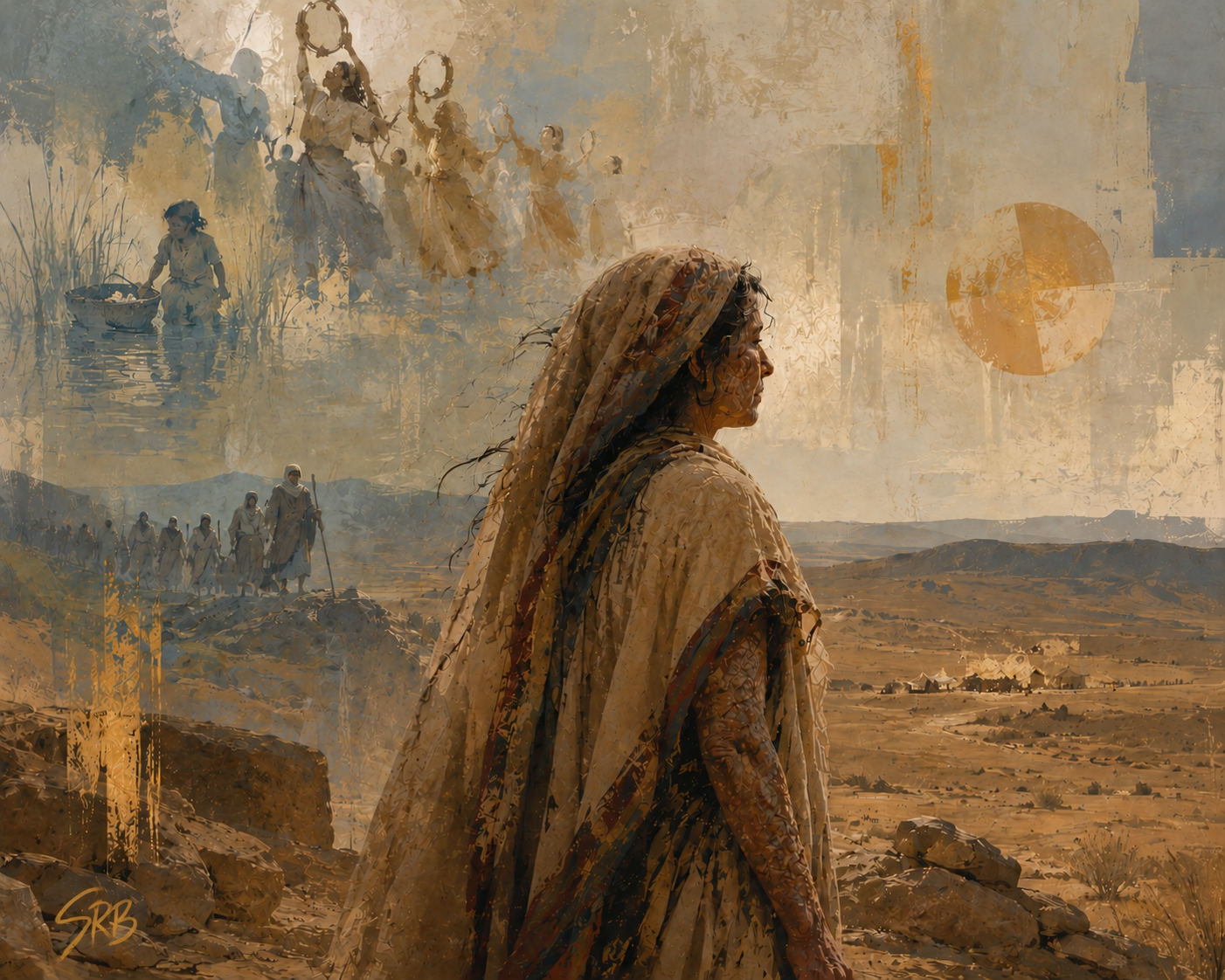
The Torah does not erase Miriam because of one mistake. The people do not define her solely by one moment of conflict. She remains Miriam: the sister who watched over Moses at the Nile, the prophet who led the women in song at the sea, the leader who helped carry the people through the wilderness.
One difficult chapter does not become her entire story.
Perhaps that is a lesson we need in every generation.
When we are tired, uncertain, or under stress, it becomes easy to reduce one another to a single disagreement. We begin to see people through the lens of our most recent frustration. We forget the years of service, the acts of kindness, the sacrifices made, and the countless ways people have helped sustain a community.
The wilderness invites us to do the opposite. It invites us to remember more of the story.
Our tradition is filled with complicated people. Moses, Miriam, Aaron, and countless others are remembered not because they were flawless, but because they were human. Torah does not hide moments of conflict, frustration, or failure, nor does it allow those moments to become the whole truth about them.
Communities survive long journeys when we learn to do the same for one another.
In the months ahead, our congregation will continue important conversations about the future of Beth Israel. We will look at plans, weigh possibilities, and make decisions that will shape generations to come. Faithful people, all seeking what is best for our community, will not always see every question the same way. That is not a sign of weakness. It is part of the work of building a future together.
The challenge is not to avoid disagreement. The challenge is to remain a community while we discern the way forward.
The people waited for Miriam before moving on. Not because she was right. Not because she was wrong. But because she was part of the community.
As we continue our own journey together, may we remember that disagreement does not erase relationship. Frustration does not erase contribution. One difficult moment does not erase a lifetime of commitment.
The wilderness has a way of magnifying our frustrations with one another. This week’s Torah portion reminds us to remember more of the story. Perhaps part of the work of community is learning not to leave one another behind when disagreement becomes difficult.
,שבת שלום
Student Rabbi Ben