

Still Seeing Grasshoppers
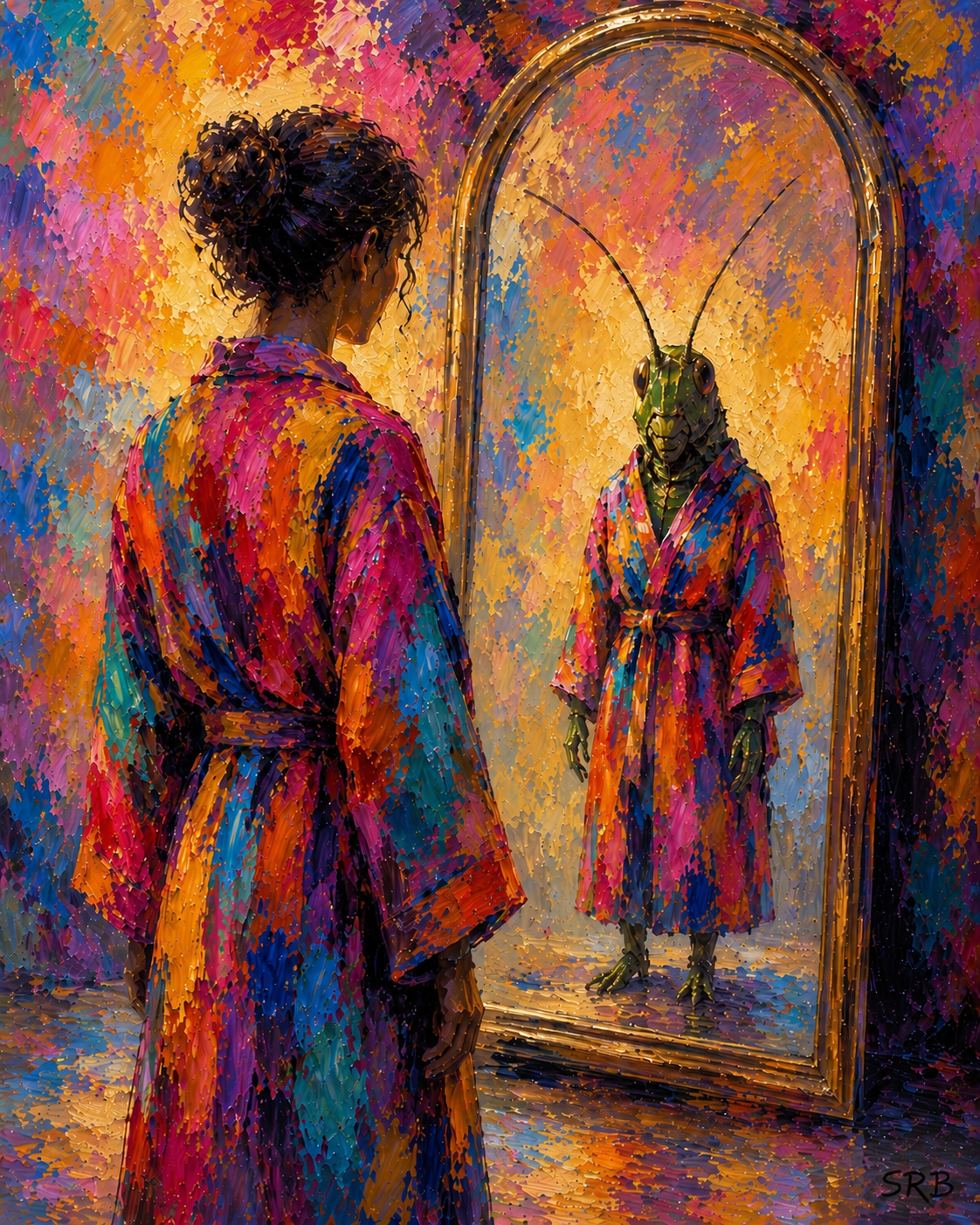
One of the details I often forget about Parashat Sh'lach is that the Israelites actually succeeded.
We tend to remember this as the Torah portion that leads to forty years of wandering in the wilderness. We remember the punishment. We remember the delay. We remember the generation that never entered the land.
What we sometimes forget is that the Israelites had already completed the journey.
The trip from Sinai to the edge of the Promised Land was not supposed to take forty years. The Israelites reached the land. The spies entered it. They saw it with their own eyes. They returned carrying fruit so large that it took two people to carry a single cluster of grapes.
They had arrived.
The tragedy of the story is not that they failed to reach the land. The tragedy is that they reached it and could not believe they belonged there.
When the spies return, they describe powerful cities and formidable inhabitants. Then comes one of the most revealing lines in the Torah:
"We seemed to ourselves like grasshoppers, and so we seemed to them." (Numbers 13:33)
Notice what they actually know and what they assume. They know how they saw themselves. They do not know how the people of the land saw them. Yet the two have become inseparable.
The spies look at themselves and see grasshoppers. Small. Vulnerable. Insignificant. And because that is how they see themselves, they assume everyone else must see them that way as well.
What makes this so heartbreaking is that the Israelites are no longer slaves. Egypt is behind them. The sea has already parted. Sinai has already happened. The Mishkan has already been built. They have survived hardships that once seemed impossible. Yet when they stand at the edge of the future they have been promised, they still see themselves through the eyes of the past.
Perhaps that is the deeper warning of this week's Torah portion.
Sometimes we continue carrying old stories about ourselves long after they have ceased to be true. We define ourselves by old fears, old failures, old limitations, or old identities. We fail to notice how much we have grown because growth often happens slowly. By the time we reach a new threshold, we may already have become the person capable of crossing it.
The Israelites reached the land. The journey had succeeded. What they could not yet do was recognize the people they had already become.
Maybe that is a challenge for all of us. To look honestly at ourselves. To notice the distance we have traveled. And to ask whether the picture we carry of ourselves is still true.
Or whether, sometimes, we are still seeing grasshoppers when something much stronger is standing there.
,שבת שלום
Student Rabbi Ben