

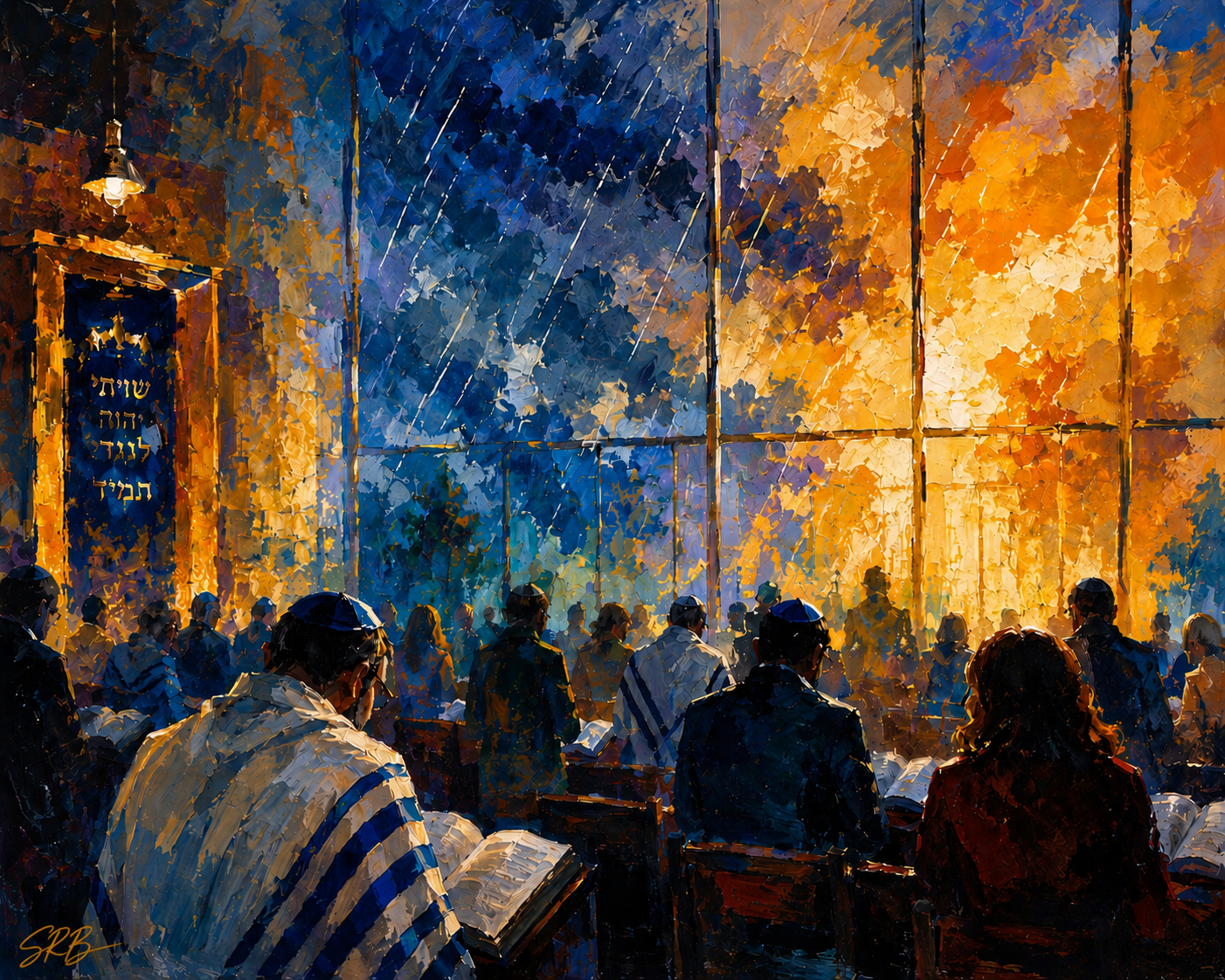
Same Hearts, Different Weather
Parashat Naso contains one of those passages many readers skim.
Twelve tribal leaders. Twelve offerings.
The same silver dish.
The same silver bowl.
The same animals.
The same measurements.
Again.
And again.
And again.
The Torah could have saved a great deal of parchment by simply saying: “The others brought the same.” But it does not.
Jewish tradition notices this. If the gifts were identical, why repeat them twelve times? One answer is that while the offerings looked the same from the outside, they were not the same from the inside. Each tribe brought the same gift. Each tribe brought a different self.
We stand together for the Amidah. We say the same words. We bow at the same places. We rise and fall with the same liturgy. But no two people are praying the same prayer.
One person comes carrying gratitude.
Another comes carrying grief.
One arrives hopeful.
One exhausted.
One focused.
One restless.
One full of certainty.
One simply trying to make it through the page.
The siddur may be shared. The inner weather is not.
Some weeks we arrive ready to sing.
Some weeks we arrive carried by habit, coffee, obligation, or sheer stubbornness.
Still, we stand.
Same prayers in our hands.
Maybe part of the wisdom of communal Jewish life is that we do not require matching inner weather before we can pray together.
Maybe that is what the Torah is doing with its long, repetitive list of offerings.
Not saying that everyone felt the same thing.
Not pretending that devotion always looks serene or inspired.
Just making room for twelve people to bring the same offering through twelve different seasons of the heart.
This week, perhaps that is worth remembering.
We do not need identical hearts to stand together.
Sometimes holiness looks less like arriving with identical hearts, and more like bringing what we actually have in our hands — and making room for others to do the same.
,שבת שלום
Student Rabbi Ben