Amen
Tonight's Torah portion gives us one of the strangest rituals in the whole Torah.
We have heard this language before. Earlier in Deuteronomy, Moses says to the Israelites:
.רְאֵה אָנֹכִי נֹתֵן לִפְנֵיכֶם הַיּוֹם בְּרָכָה וּקְלָלָה
Re’eh anochi notein lifneichem hayom bracha uklalah — "See, I set before you today a blessing and a curse." (Deut. 11:26)
But this week, in Ki Tavo, that idea stops being something the Israelites hear and becomes something they are going to do.
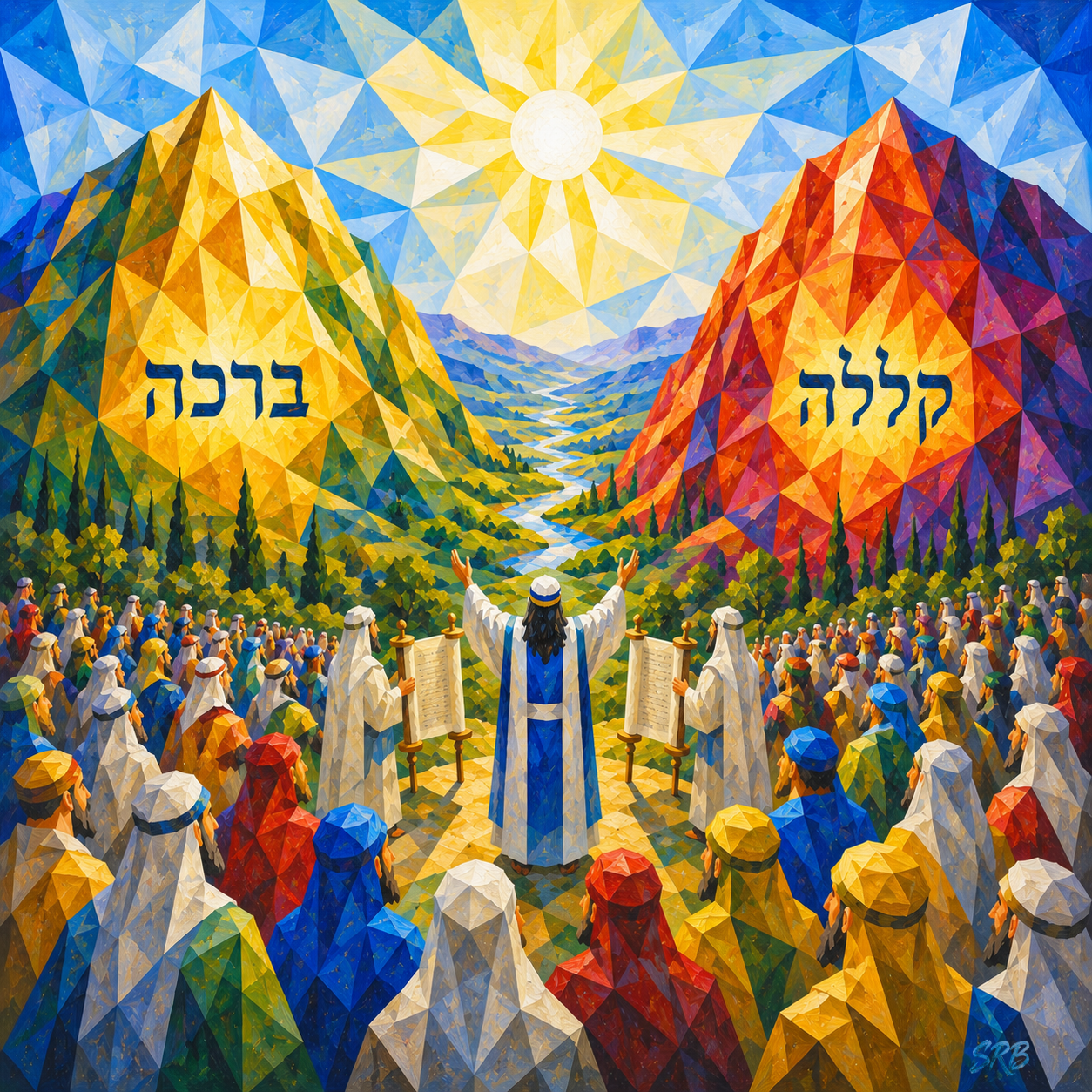
When they enter the land, they are to gather at two mountains, Mount Gerizim and Mount Ebal. Half of the tribes will stand on one side, half on the other. Gerizim will carry the blessing. Ebal will carry the curse. The Levites will proclaim the words of the covenant in a loud voice, and again and again the people will answer with a single word:
אָמֵן
Amen.
We say that word so often that it can slip past us without any weight at all. But amen comes from a root that also gives us אֱמוּנָה, emunah, faithfulness, and נֶאֱמָן, ne’eman, trustworthy — something solid enough to lean your weight on. Amen is not quite “I agree.” It is closer to “let this hold.” “Count me in.” “I will be faithful to this.”
And what strikes me about this ritual is that, at least as Torah lays it out, the Israelites are only going to do it once.
This generation will stand there and say amen. But they aren’t only speaking for themselves. They are entering a covenant that will extend far beyond them — to their children and their children’s children, to generations of people who aren’t there yet to speak for themselves.
Tonight, as we welcomed a new child into the covenant of the Jewish people, I can’t help but think about that amen.
Because a new child coming into the world is an extraordinary blessing.
There is new life where there wasn’t new life before. There is a new person, a new story beginning. And when we gather for a baby naming, of course we speak the language of blessing. We bless this child. We bless the parents. We pray for health and happiness, for love and wisdom, for a life filled with meaning and joy.
But anyone who has ever raised a child knows that saying yes to a child is not saying yes only to the blessing.
It is saying yes to sleepless nights and worry. It is saying yes to scraped knees and sickness and questions you don’t know how to answer. It is saying yes to frustration and fear and uncertainty. It is saying yes to watching someone you love more than you thought possible become their own person, knowing that you will not be able to protect them from everything life will bring.
When we choose to bring a child into the world, we don’t get to choose only the good days.
We say amen to the whole thing.
And I want to be careful here. The curses proclaimed in our portion are not simply a metaphor for the ordinary difficulties of life, or for the hard parts of raising children. They belong to a particular understanding of covenant and its consequences, and I don’t want to flatten them into something gentler than they are.
But I do think Torah understands something important in placing blessing and curse before Israel at the very moment they are asked to say amen.
A covenant cannot be made only with the parts we would have chosen for ourselves.
Israel doesn’t stand at the edge of the Promised Land and say, “We accept the blessing, but we’ll pass on everything difficult.”
They say “Amen!”
And perhaps that is one of the most profound things parents do.
Long before they know who their child will become, long before they know what gifts that child will bring into the world or what struggles that child will face, they say yes.
Yes, we will love you when it is easy.
Yes, we will love you when it is hard.
Yes, we will celebrate with you.
Yes, we will worry about you.
Yes, we will teach you, and eventually we will have to learn from you.
Yes, we will make mistakes.
Yes, you will make mistakes.
Yes, there will be days of tremendous blessing, and there will be days we wish we could make easier for you.
Amen.
Tonight, this child is too young to say amen.
But the parents can.
And in some ways, they already have. They said it when they chose to bring a new life into this world. They have said it through every act of care that brought them to this night. And tonight they say it again, in another way, by giving their child a Hebrew name and placing that child within a covenant that began long before any of us were here.
The Israelites standing at Gerizim and Ebal answered for children who had not yet been born. Tonight, two parents do the same.
Because they are not only saying, “You are our child.”
They are saying, “You are part of a people.”
You belong to a story that began before you and will continue after you. You belong to Torah. You belong to generations of people who have known blessing and hardship, celebration and grief, certainty and doubt, and who have continued, generation after generation, to say Amen to this covenant.
And perhaps that is part of what makes tonight so powerful.
The parents say amen to this child.
And we, as a community, say amen with them.
Because none of us enters covenant alone. None of us raises children entirely alone. None of us makes it through the blessings and hardships of a human life entirely alone.
We have a people. We have a tradition. We have a community. We have a God with whom generations before us have prayed and argued and wrestled and rejoiced.
Tonight we celebrate a tremendous blessing: a new life has entered the world.
We cannot know everything this life will hold. Neither could the Israelites standing at Gerizim and Ebal.
But they stood there together.
And they said:
אָמֵן
Amen.
May we do the same.
,שבת שלום
Student Rabbi Ben