

The Reunion We’ve Been Waiting For
Parashat Vayigash (Genesis 44:18 - 47:27)
There are reunions we imagine for years. And then there are reunions that arrive only after everyone involved has been changed by time, fear, and loss.
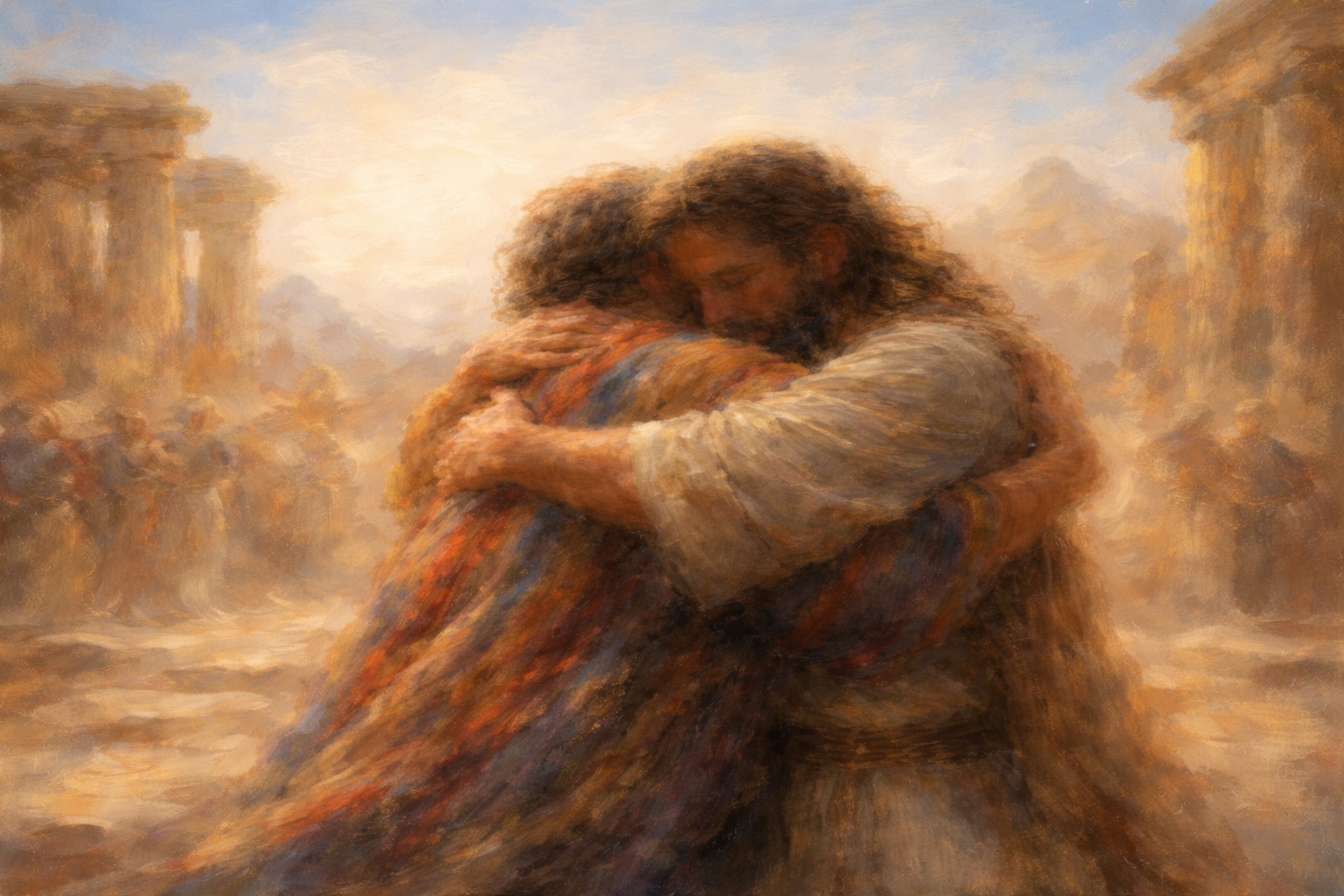
Parashat Vayigash gives us one of the most emotionally charged reunions in the Torah. Joseph, long presumed dead, stands face to face with his brothers. Judah, once a key architect of Joseph’s downfall, steps forward and offers himself as a substitute for Benjamin. This is the moment we’ve been waiting for.
But the Torah doesn’t rush it. And it doesn’t sentimentalize it.
Judah does not plead for mercy. He does not argue law or logic. He tells a story. He tells Joseph about their father—about love, about fear, about what it would mean for Jacob to lose one more son. And then Judah says something astonishing: Take me instead.
This is not the Judah we met earlier in the story. This is not the brother who once asked, “What profit is there?” This is a Judah who understands that responsibility sometimes means absorbing pain so that someone else does not have to.
That is the moment Joseph breaks. Not when the brothers are frightened. Not when they confess guilt. But when Judah proves that he is no longer willing to sacrifice another brother for his own survival.
Joseph reveals himself. And instead of revenge, he offers meaning. “It was not you who sent me here,” he tells them, “but God… to preserve life.”
Joseph does not erase the past. He reframes it. The pit still existed. The betrayal still mattered. But it does not get the final word.
And then comes the next turn of the story—one we often rush past. Jacob is invited to come down to Egypt.
Before he goes, God appears to him and says: “Do not be afraid… I will go down with you to Egypt, and I will also bring you up.” It’s a striking promise. God does not say Egypt will be temporary. God does not say it will be easy. God says: I will be with you there.
This is the beginning of galut—exile. But it is also a statement about presence.
God does not remain only in the land of promise. God enters the land of complexity, compromise, and survival. Egypt will feed them. And Egypt will eventually enslave them. And God chooses to be present inside that tension.
Vayigash teaches us something quietly radical. Reunion does not undo history. Redemption often begins inside unfinished stories. And God does not wait for us to reach safety before coming with us.
Sometimes, God goes down into Egypt with us—not as rescue, but as accompaniment.
May this Shabbat remind us that we are not alone in our uncertainty, that holiness can be found even in descent, and that presence itself can be a form of redemption.
,שבת שלום
Ben