Before We Know How This Ends
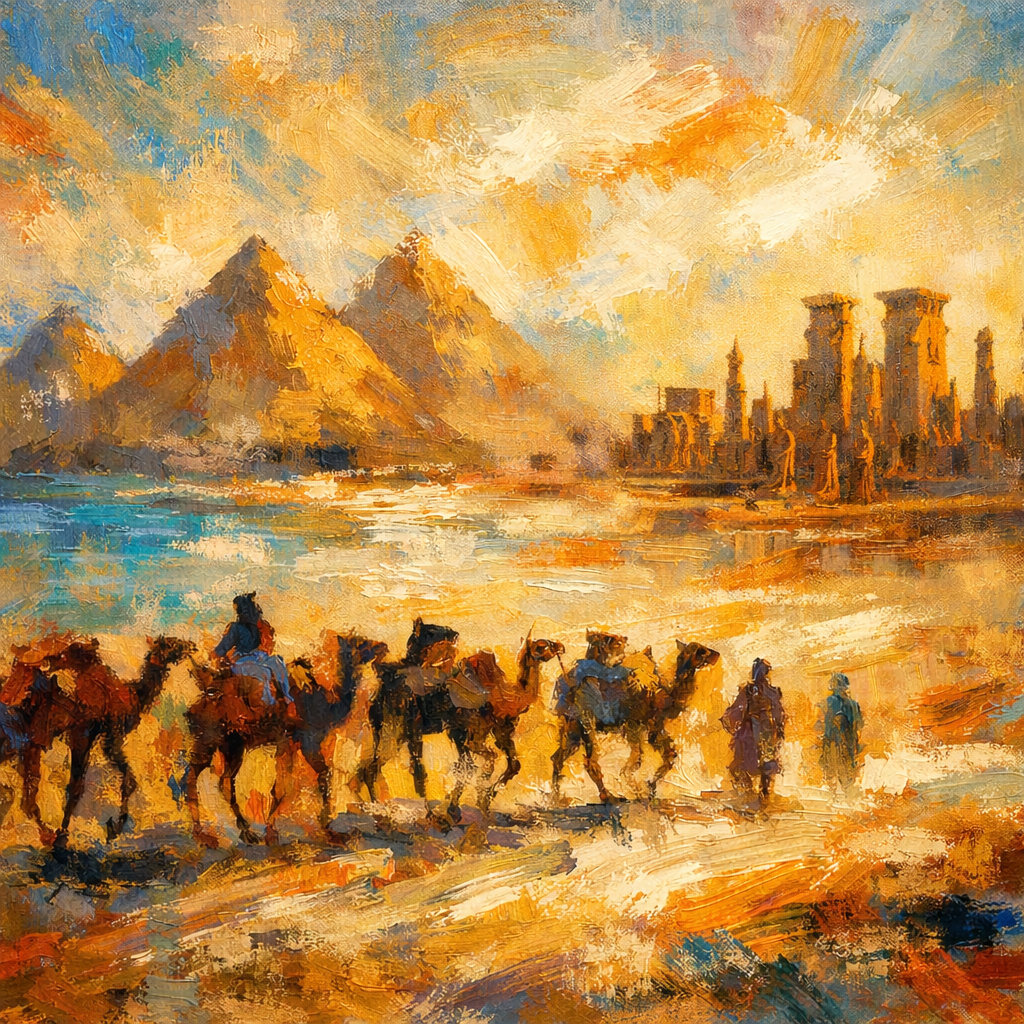
There’s a moment in every long story when you realize something has already shifted, but you don’t yet know what it means. Parashat Mikeitz lives there. Not at the breaking point. Not at the reconciliation. But in the pressure just before.
Joseph is alive in Egypt. The brothers are alive in Canaan. The famine is spreading. And the family—this family that carries a promise—is starting to move. Not because they understand what God is doing. But because standing still is no longer an option.
What strikes me this year is not Joseph’s brilliance or Pharaoh’s dreams. It’s the fear the brothers are living with. Not fear of punishment alone—but fear that they may have already changed the future.
Rashi assumes something important here. He assumes these brothers knew that this wasn’t just a household—it was a covenantal family. Abraham and Sarah didn’t keep God’s promises secret. Isaac and Rebecca didn’t raise Jacob in a vacuum. And, we assume, Jacob didn’t withhold the story from his sons. They knew that this family mattered. That history was somehow moving through them. That twelve brothers wasn’t incidental. א
So when Joseph is gone, it isn’t just grief. It’s dread. What if we didn’t just hurt our brother? What if we interfered with something larger? What if we took a wrong turn—and the road can’t be corrected?
You can hear that fear in their words—
We are twelve brothers.
The youngest is with our father.
And one… is no more. ב
They don’t need to say Joseph’s name. It’s been sitting in the room for over twenty years.
This isn’t teshuvah, yet. ג There’s no apology. No confession. No repair. But something has begun: a reckoning, a pressure, a realization that the past doesn’t stay buried just because time passes. Teshuvah that begins not with speech—but with fear.
And Joseph—the one who has been wronged—doesn’t rush redemption. He creates space. Space for truth to surface. Space for responsibility to emerge. Space for the family to show whether it has changed.
Mikeitz ends before we know how this resolves. Before forgiveness. Before reunion. Before clarity. It ends in uncertainty—which feels uncomfortably familiar this week.
Mikeitz doesn’t give us redemption yet. It gives us the moment before—when fear and responsibility meet. When the future is unclear. And when the only faithful move is to keep choosing life without knowing how the story ends.
א Rashi. Commentary on Genesis 42:13. Sefaria, n.d. https://www.sefaria.org/Rashi_on_Genesis.42.13.
ג In classical Jewish theology, teshuvah is defined not as remorse alone but as demonstrable ethical transformation, culminating in changed behavior when confronted with the same moral test. (Maimonides, Hilkhot Teshuvah 2:1. Sefaria, n.d. https://www.sefaria.org/Mishneh_Torah%2C_Repentance.2.1.