Life After Freedom
Parashat Beshalach feels almost overwhelming. The plagues are behind us, but the story does not slow down. Pharaoh changes his mind. The chariots thunder forward. The sea stands in front of a terrified people. There is cloud by day and fire by night. There is song and dancing on the far shore. There is hunger in the wilderness. And there is war with Amalek. It is too much for a single portion. And that may be precisely the point.
Because Beshalach is not about leaving Egypt. It is about what happens after.
Freedom arrives, and almost immediately it feels fragile. Pharaoh regrets his decision. The Israelites panic and cry out that slavery might have been better than dying in the wilderness. Trauma does not disappear just because chains are removed. The first lesson of freedom is that it is disorienting. God’s presence appears not as something fixed and permanent, but as a moving pillar — cloud shifting by day, fire flickering by night. Guidance is there, but it moves. Trust, in this new world, means walking without guarantees.
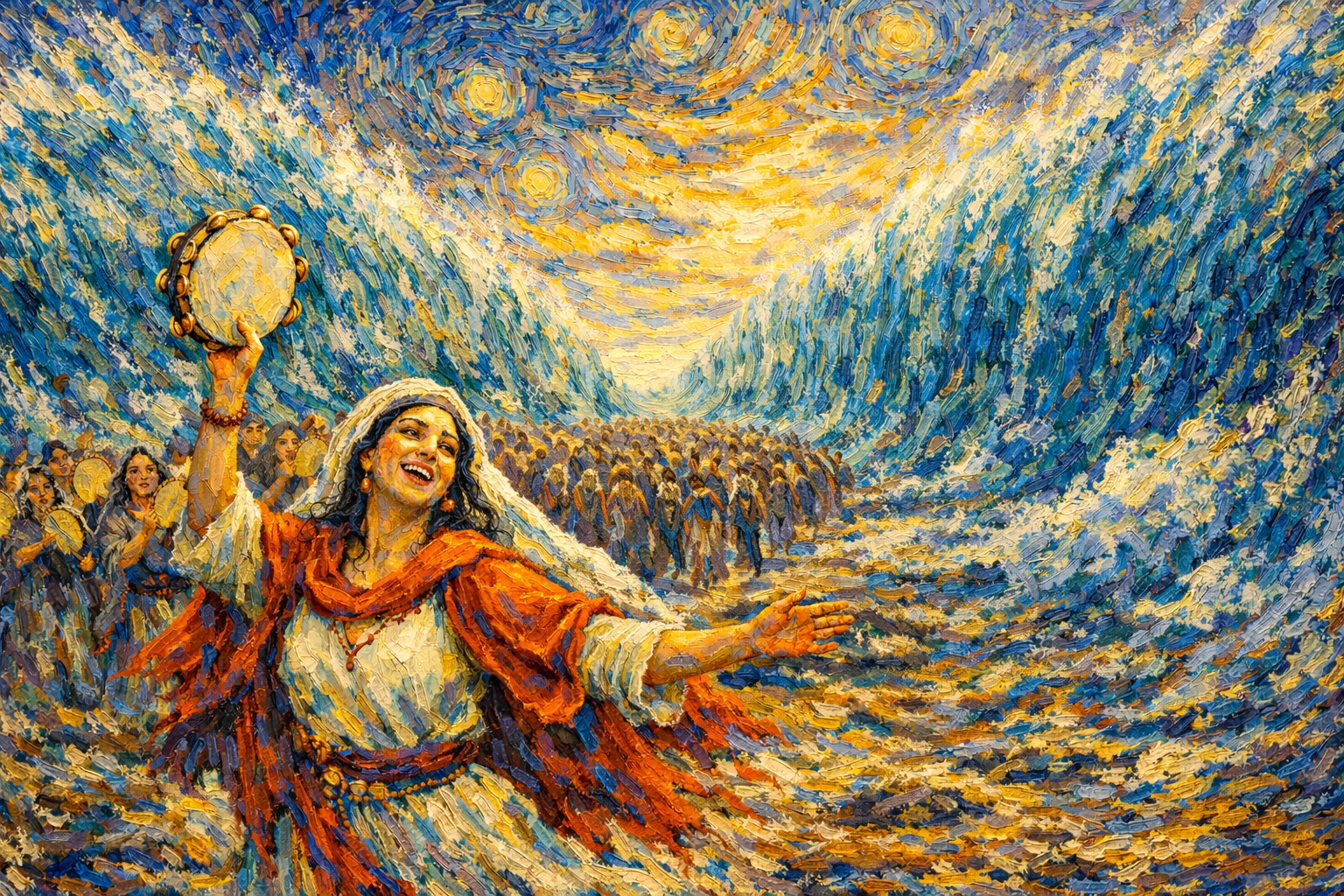
At the sea, the tradition teaches, someone steps forward before the waters part.א The path does not appear until a body is already in the water. Courage precedes clarity. Only then comes the great song — Mi Chamocha. Tambourines. Dancing. Breath returning to lungs that had held fear. And yet even here our sages imagine God silencing the angels who wish to celebrate the drowning of the Egyptians. “My children are drowning,” God says.ב Freedom must not harden into triumphalism. Redemption cannot cost us our humanity.
The wilderness that follows is quieter but no less demanding. Manna falls, but only enough for each day. It cannot be hoarded. It cannot be secured for tomorrow. Freedom is sustained not by one great miracle, but by daily trust. And when Amalek attacks, Moses lifts his hands. And when he tires, Aaron and Hur hold him up. Even liberation requires community. No one holds their arms up forever alone.
Beshalach moves from fear to faith to hunger to battle without pause because freedom itself is not a single event. It is a discipline. It asks for courage before certainty, restraint in victory, dependence without despair, and strength that is shared. The sea may split in a moment. Learning how to live on the other side takes much longer.
And perhaps that is why the Torah gives us so much in this single portion. Freedom is not sustained by spectacle. It is sustained by character. Not by one triumphant song, but by daily bread. Not by standing safely on the shore, but by stepping into uncertain waters. Not by lifting our hands once, but by allowing others to hold them up when we grow tired. Beshalach does not simply recount a miracle. It teaches us how to survive it.
שבת שלום,
Ben
א. Babylonian Talmud, Sotah 37a. https://www.sefaria.org/Sotah.37a.3?lang=bi&with=all&lang2=en.
ב. Babylonian Talmud, Megillah 10b. https://www.sefaria.org/Megillah.10b.26?lang=bi&with=all&lang2=en.