
After the Fire Fades: Parashat Bamidbar
There is a strange feeling that comes with arriving at Parashat Bamidbar (במדבר), “in the wilderness.”
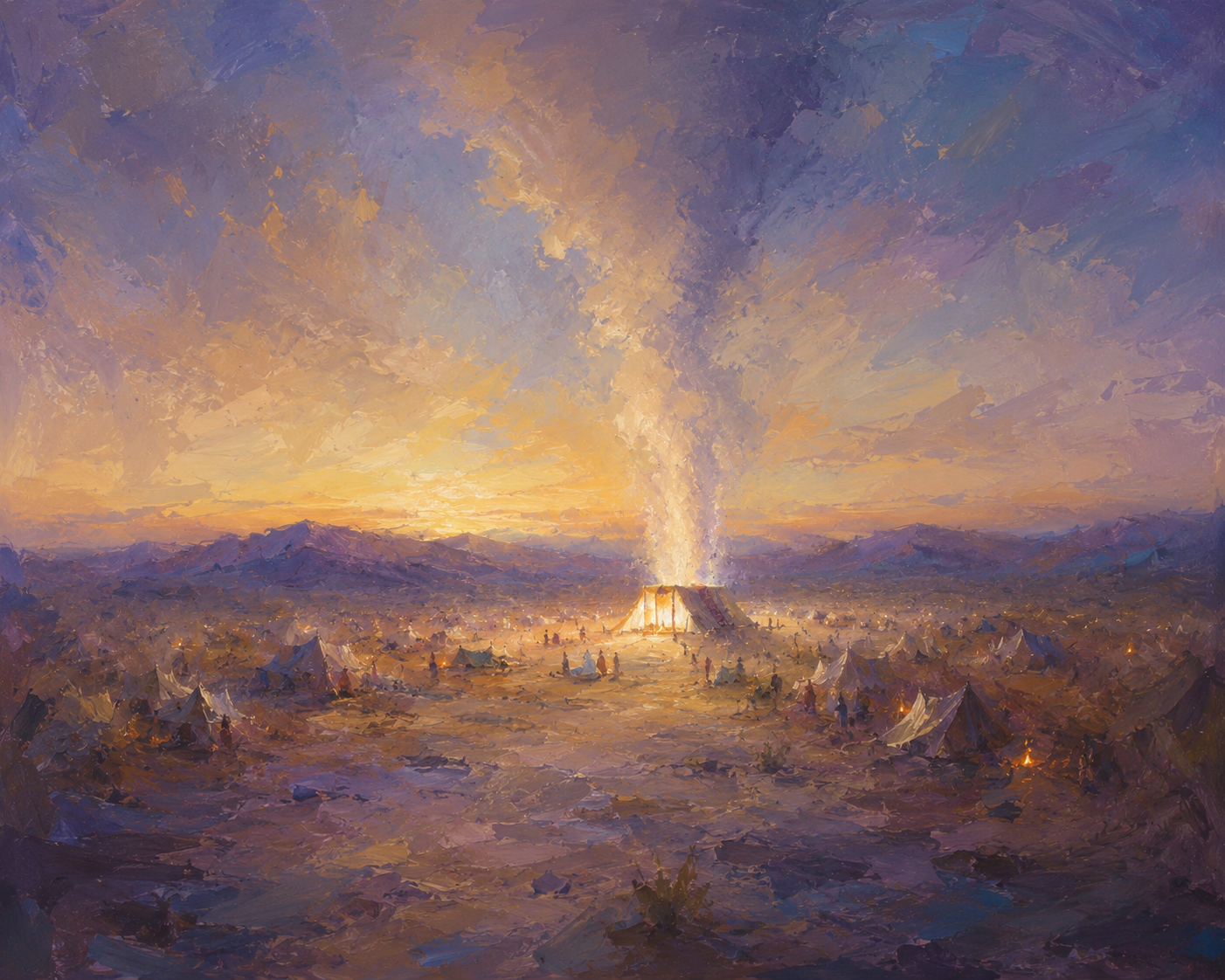
For weeks now, Torah has carried us through some of its most dramatic moments. We have stood at Sinai through thunder and lightning. We have watched the Mishkan rise from gifts, labor, and sacred purpose. Fire and cloud and revelation have filled the pages. And then suddenly, the scenery changes. The people are still not home.
The Mishkan is built. The covenant has been given. The great moments of revelation have happened. But now comes the wilderness.
And perhaps that is why this portion feels so close to home right now.
As a congregation, we have lived through our own season of fire, shock, urgency, and overwhelming support. There were immediate decisions to make, immediate needs to address, immediate acts of courage and kindness that carried us through those first impossible days.
But now we find ourselves somewhere different emotionally and spiritually.
The debris has been cleared. Plans are taking shape. Conversations continue. The future exists before us, but we are not there yet. We are living in the in-between space.
That is the wilderness.
And in Torah, the wilderness is not only dangerous because it is difficult. It is dangerous because it is disorienting. The great threat of the wilderness is not simply hardship — it is drift. It is losing touch with who we are, why we are together, and what sacred purpose still calls us forward.
Again and again in the Book of Numbers, the people will struggle with exactly that. Fear grows. Patience thins. Complaints rise. Common purpose weakens. The wilderness tests whether a people can remain spiritually grounded when stability disappears.
And yet the Mishkan travels with them.
That detail matters. The Israelites do not wait to arrive before carrying holiness forward. Sacred life does not pause until permanence returns. The Presence moves with the people through uncertainty itself.
There is a story about Elijah* that has always lingered with me. Elijah experiences wind, earthquake, and fire — and then, after all of it, comes the kol d’mamah dakah (קול דממה דקה), the “still small voice,” or perhaps more literally, “the sound of thin silence.”
Sometimes we encounter God in thunder. Sometimes we encounter God in what remains after the thunder fades.
That may be one of the spiritual shifts of Bamidbar. Sinai teaches us to recognize holiness in fire and spectacle. The wilderness teaches us to recognize holiness in endurance, in quiet faithfulness, in continuing to gather, pray, sing, study, and carry one another forward day after day.
The Presence over the camp is quieter than Sinai. But it is no less holy. And maybe that is the challenge of the wilderness: learning to hear the sacred even when the mountain is no longer trembling.
,שבת שלום
Student Rabbi Ben
———————————-
* 1 Kings 19:1-12