Let the Ground Breathe
Parashat Behar-Bechukotai
There is something almost strange in this week’s double Torah portion. We are told to let the land rest.
Not just people. Not just servants. Not just animals. The land itself.
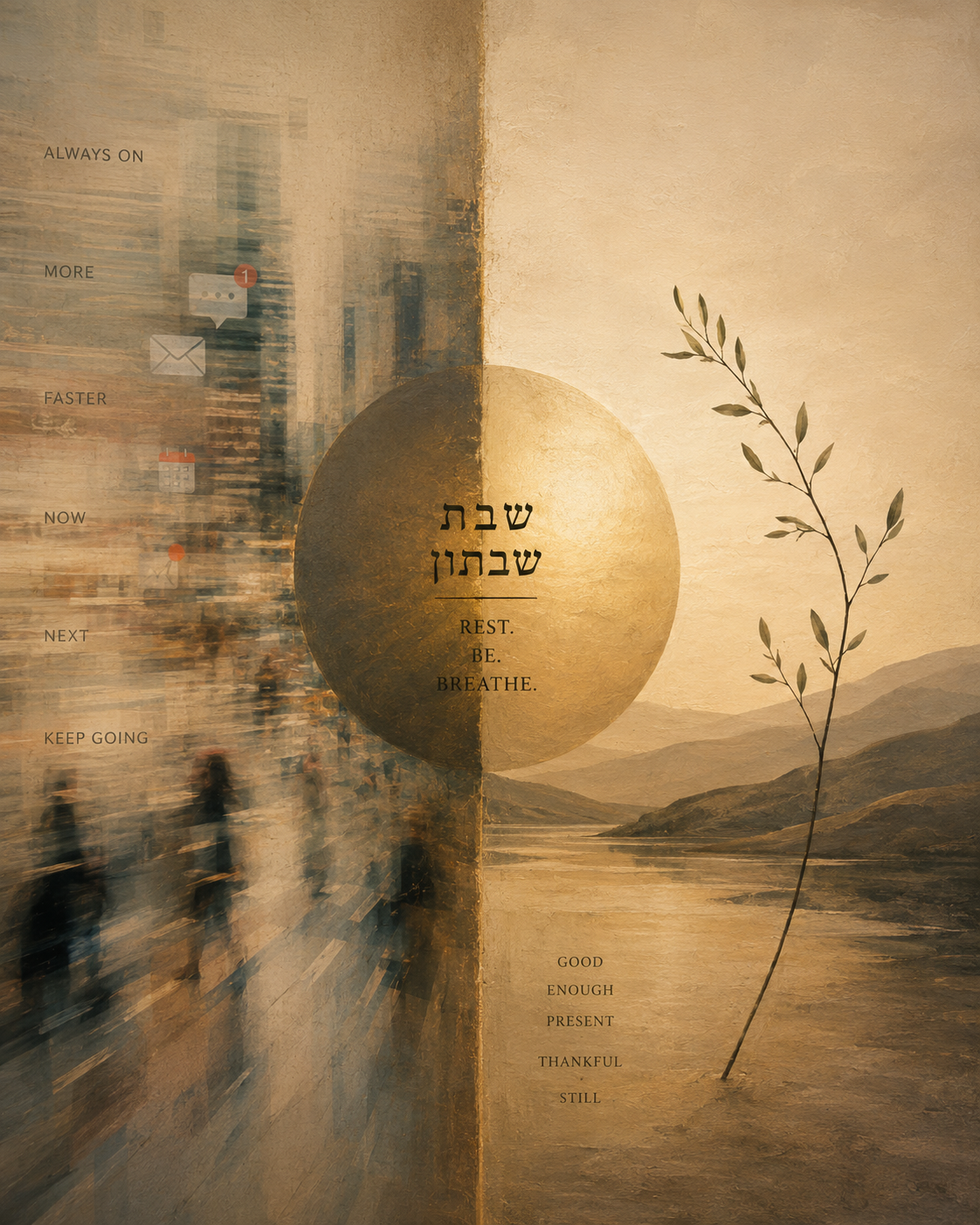
For six years the fields may be planted and harvested, but in the seventh year the earth is given a Shabbat Shabbaton (שבת שבתון) — a complete rest.
We understand, at least a little, what it means for people to need rest. We know exhaustion. We know burnout. We know what it feels like to be stretched too thin.
But the Torah asks us to imagine something bigger: what if creation itself needs room to breathe?
The command is striking because farming is not presented as evil. Planting crops is good. Feeding people is holy work. Cultivating the earth is part of our partnership with creation.
And yet Torah still says: stop.
Because even good things can become endless extraction.
A field can produce and produce and produce until the soil is depleted. The frightening thing is that the damage is not always obvious at first. The ground may still appear fruitful long after it has begun to weaken underneath.
Human beings are not so different.
We live in a world that rarely stops harvesting. Our labor, our attention, our bodies, our emotions, even our silence are constantly being consumed. We carry our phones like extensions of our nervous systems. We push ourselves past healthy limits and call it discipline. We keep scrolling, keep striving, keep producing, because somewhere deep inside us is the fear that stopping means falling behind.
But Torah keeps whispering another truth: even the earth gets Shabbat.
And maybe that is part of what it means to “be still and know” (Psalm 46:10).
Stillness is not laziness. Rest is not weakness. In Torah, rest is holy because it reminds us that we are not machines. The world does not belong entirely to us, and neither do we belong entirely to productivity.
Even God rests in the story of creation.
Not because creation was bad. Not because the work lacked meaning. But because holiness also lives in restraint.
There is wisdom in knowing when enough is enough.
Maybe Shabbat Shabbaton is ultimately an invitation to loosen our grip a little. To let the soil recover. To let the soul recover. To stop treating every moment of life as something to be harvested.
And perhaps, in that stillness, we finally remember that we too are part of creation — not just its caretakers, but living beings in need of rest ourselves.
,שבת שלום
Student Rabbi Ben