
Where Do I Wear My Covenant?
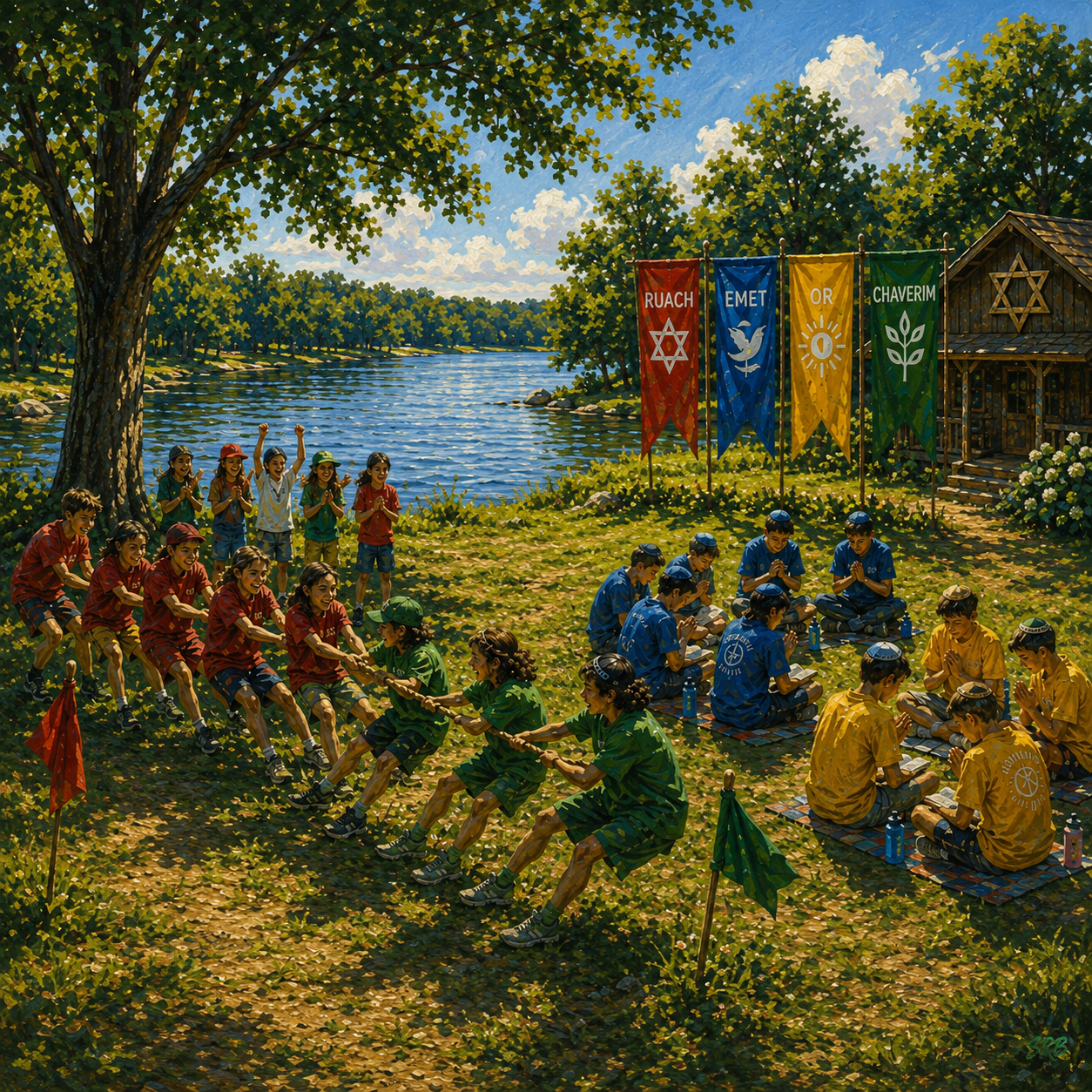
This week, I have had the joy of spending time at Jacobs Camp with our kids.
There is something different about seeing Jewish children together at camp. Judaism gets out of the classroom and into their bodies. It gets loud. It gets sweaty. It gets covered in lake water and grass and paint.
This week, watching our kids during Color War, I saw older and younger campers thrown together, competing and cheering, leading and following, praying and singing. I watched them discover that they belonged to one another.
And then I came to this week’s Torah portion, Parashat Va-et’chanan.
Right there, in the middle of Moses’ long final teaching to the Israelites, are words we know so well that it can be easy to forget how physical they are:
Sh’ma Yisrael, Adonai Eloheinu, Adonai Echad (Deuteronomy 6:4).
Hear, O Israel, Adonai is our God, Adonai is One.
But the Torah does not tell us simply to say these words.
It tells us to teach them to our children. To speak of them when we sit at home and when we walk along the way, when we lie down and when we rise up. To place them on the doorposts of our homes.
And then it gives us this wonderfully physical command:
Ukshartam l’ot al yadecha — bind them as a sign upon your hand (Deuteronomy 6:8).
Wear the covenant on your body.
There is something powerful about that image. Covenant is not meant to remain an idea somewhere inside our heads. Torah imagines a Judaism that gets onto us. Onto our hands. Between our eyes. Across our doorways. Into our conversations. Into the rhythms of morning and evening. Into the way we raise our children.
Reading Va-et’chanan at camp this week, I realized I was watching something of that happen all around me.
Our kids were wearing Judaism.
And I wonder what it would look like for the rest of us to inhabit Judaism that way.
Our children go to camp and, for a few weeks, Judaism becomes the world they live inside. Prayer is not something set apart from life. It happens alongside swimming and eating and playing. Hebrew is not confined to a book. Jewish songs are sung walking down a path. Community is not something scheduled for an hour on Friday night.
We may not be able to spend our lives at summer camp. But perhaps we can bring some of that home.
Perhaps that is one of the questions Va-et’chanan asks each of us:
Where do I wear my covenant?
The Sh’ma does not allow covenant to remain abstract. It asks us to bind it to ourselves until it becomes part of how we move through the world.
Our children are learning to wear the covenant.
Maybe they can teach the rest of us how.
,שבת שלום
Student Rabbi Ben