When Nouns Become Verbs
This week someone introduced me to a Hebrew word I had never really paid attention to before. Not chesed. I knew that word. The word was chasad, a rare biblical verb built from the same Hebrew root.
It stayed with me all week.
We talk about chesed often. Loving-kindness. Mercy. Steadfast love. It is one of those beautiful Hebrew words that seems almost too rich to translate. But this week I encountered it as a verb.
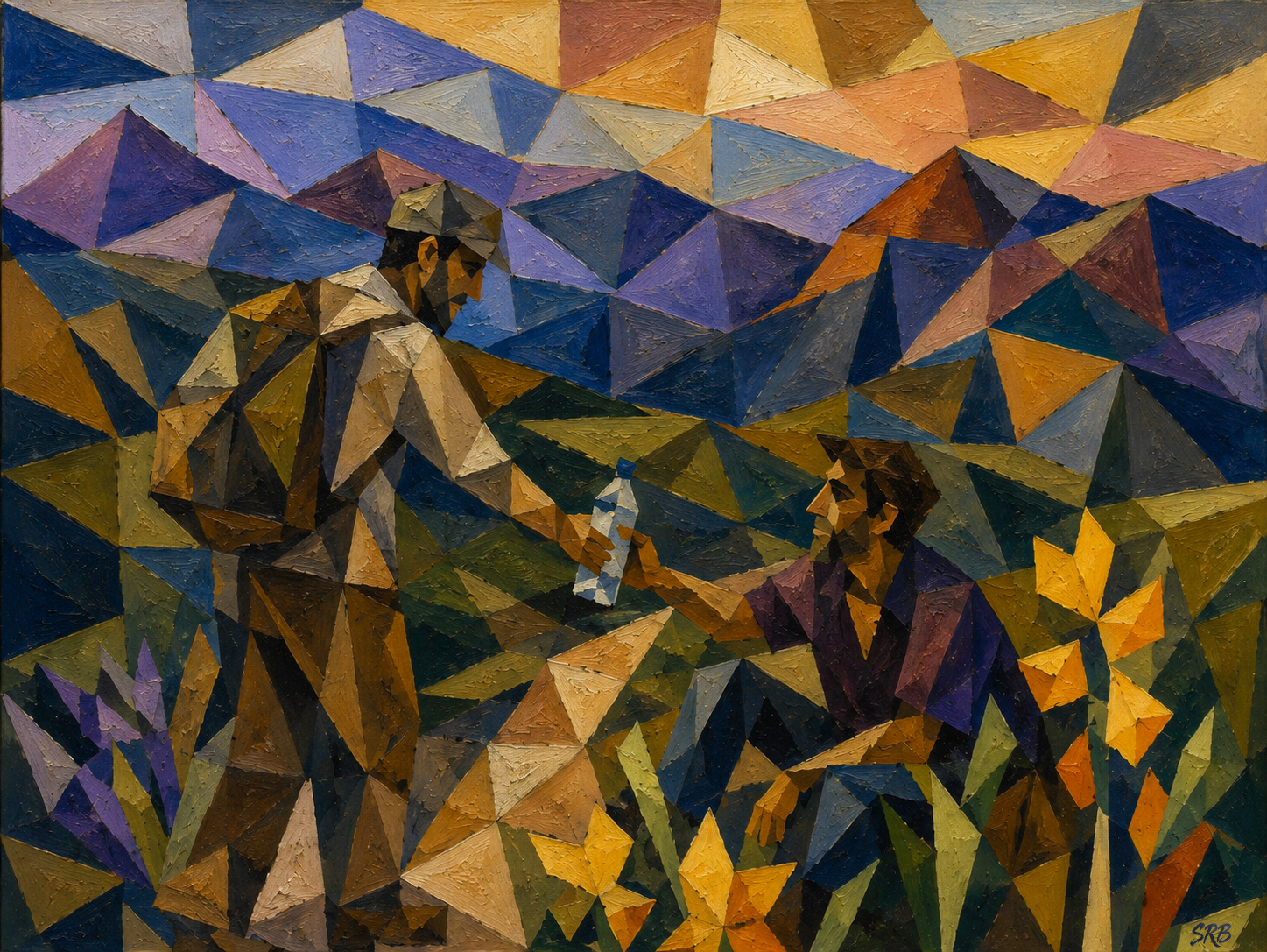
A verb asks something different of us. A noun can be admired. A verb asks someone to act.
And so, I sat with that thought while reading this week’s double portion, Parashat Matot–Masei. There are no seas splitting here. No mountain wrapped in fire. No manna falling from heaven.
Instead, there are promises to keep. Families finding their place. Boundaries to establish. A people learning how to live together.
It feels like the Torah has shifted from teaching Israel what the covenant is to teaching Israel how to live inside it.
Rabbi Zalman Schachter-Shalomi reflected on the Hasidic concept of devekut—cleaving to God. Drawing on the teaching of the Slonimer Rebbe, he suggested that the challenge is not attaining attachment to God. We are already sustained by God's presence. The challenge is awakening to that reality and learning to live within it.א I wonder if chesed asks something similar.
Perhaps one of the great tasks of the spiritual life is learning to verb our nouns. We inherit beautiful words:
Faith
Peace
Justice
Mercy
Chesed
But perhaps they were never meant to remain beautiful nouns.
Peace must eventually peace a conflict. Justice must eventually justice a wrong. Covenant must eventually covenant a community. And chesed must eventually chasad.
There is another Hebrew word from this same family: chasid. Long before it became associated with a particular movement in Judaism, it described a person whose life had been shaped by chesed.
Maybe that is what spiritual maturity looks like.
Not collecting beautiful words. Not even believing beautiful ideas. But practicing them until they become habits. Practicing them until they become character. Practicing them until, almost without noticing, they become who we are.
As the Book of Numbers comes to its close, Israel stands at the edge of the Promised Land. The great miracles are behind them. Ahead lies the ordinary work of building homes, raising families, settling disagreements, honoring promises, and caring for one another.
Perhaps that has always been where the covenant was leading. Not toward a life filled with extraordinary moments. But toward ordinary days lived extraordinarily well.
A life of faith is not built from beautiful nouns. It is built from faithful verbs.
,שבת שלום
Student Rabbi Ben
____________________________________________
א Schachter-Shalomi, Z., & Segel, J. (2005). Jewish with feeling: A guide to meaningful Jewish practice. Riverhead Books.