
What Are We Willing to Bring?
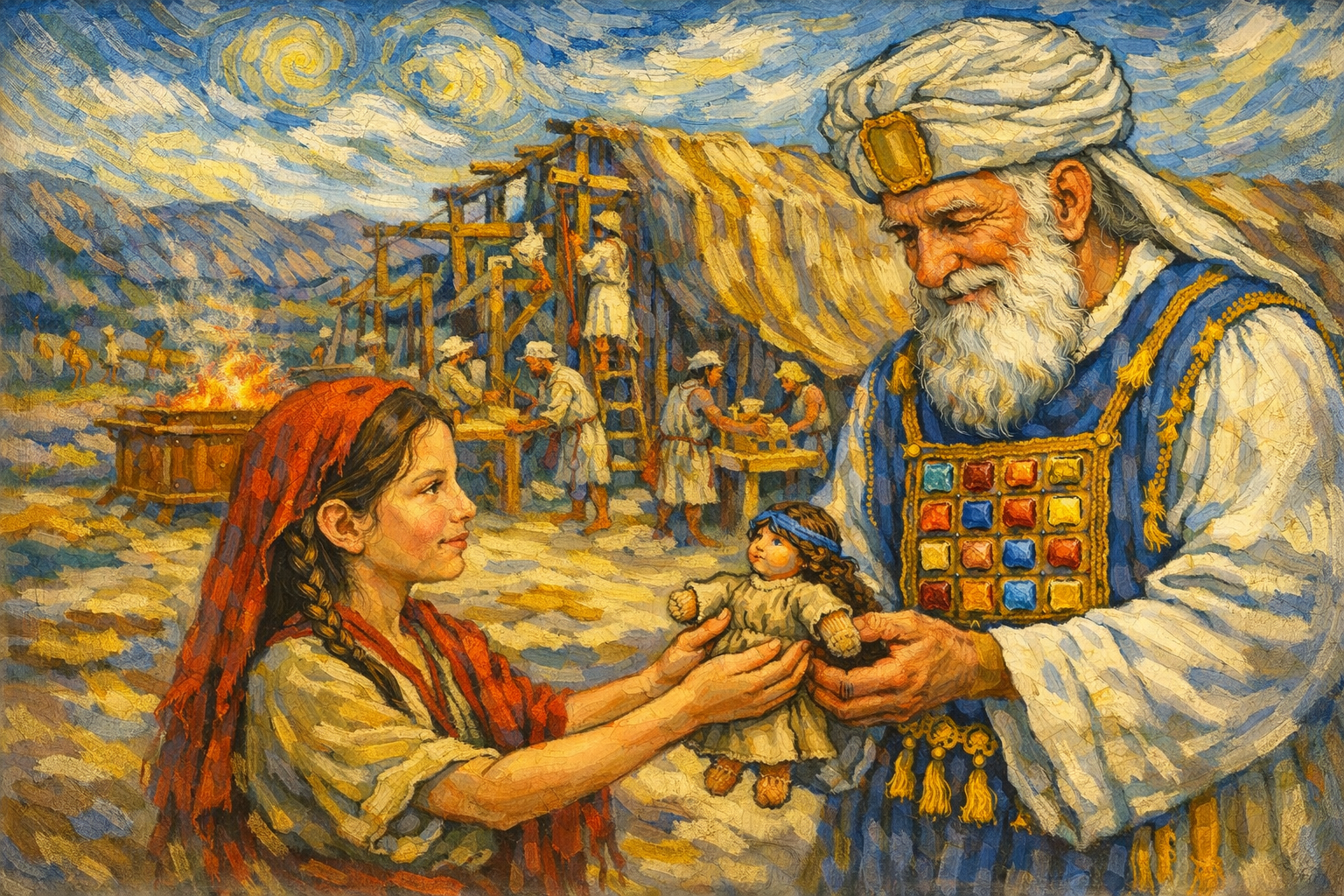
This week we begin reading Parashat Terumah. After the drama of Egypt, after the sea splits and closes, after Sinai trembles with thunder and fire, the Torah turns to something quieter: “Build Me a sanctuary” (Exodus 25:8).
But God does not say, “Moses, build it.” Instead, Moses is told to speak to the people: “Let them bring gifts — everyone whose heart moves them” (Exodus 25:2).
And they do.
Gold. Silver. Fine linens. Acacia wood. Precious stones.
These were not abstract materials. They were personal belongings — objects carried out of Egypt, possessions that could have been hoarded for security in the wilderness. Our ancestors quite literally gave of what they had in order to create a sacred space.
The Mishkan—or Tabernacle—did not descend from heaven fully formed. It rose because a people decided to bring what they could. Some brought resources. Some brought skill. Some brought time. Some brought artistry. Everyone brought something.
The Torah is not simply describing architecture; it is describing participation. Sacred space is not magic. It is the result of a community choosing to place something of themselves at the center.
We are not asked for acacia wood. But we are asked for something.
What can we bring?
Perhaps it is generosity. Perhaps it is presence. Perhaps it is a skill we have never offered before. Perhaps it is the willingness to show up consistently. Perhaps it is simply the decision to care deeply about the space we share.
The Mishkan was built from real sacrifice — from real belongings, from real effort — and it became a place where Presence could dwell.
Terumah invites us to ask a simple, searching question:
What are we willing to bring?
שבת שלום,
Student Rabbi Ben